
Understanding Oregon Released Inmates
“Released” identifies an exit from one form of custody. It does not always mean that every legal or correctional tie has ended. A county jail may release someone on security, recognizance, time served, a court order, or transfer. Oregon DOC (ODOC), formally the Oregon Department of Corrections, may release an adult in custody from prison to parole, post-prison supervision, transitional leave, another jurisdiction, or the end of a sentence. The agency that ordered and recorded the departure determines where proof will be found.
A person usually disappears from a current-only jail roster after processing. That absence is only a clue. The sheriff keeps the county booking and release record, DOC holds the state-prison record, the Oregon Board of Parole holds its actions, and the court keeps the judgment and register. A transfer to DOC, another jail, federal custody, or ICE is not a community release. Follow the custody chain until the receiving agency is clear.
- Release
- Departure from a named jail, prison, or custody placement.
- Transfer
- Movement from one custodian to another, with custody continuing.
- Discharge
- The documented end of the applicable custody or supervision obligation.
- Detainer
- An instruction to deliver the person to another jurisdiction when the first custody ends.
Oregon Release Paths Compared
Oregon records use several events that people often call release. The source must match the event. A county release record can prove the end of one booking, while a DOC record can establish a prison departure. A Board or court order may explain the legal authority. None of those records alone rules out a hold from another agency.
| Event | What It Means | Best Next Record |
|---|---|---|
| County-jail release | A local booking ended by security, recognizance, court action, time served, program placement, or transfer. | Sheriff release record and court register. |
| DOC physical release | Confinement in an Oregon prison ended, often with community supervision next. | OOS or VISOR, then a DOC record. |
| Transitional leave | Approved supervised placement outside prison before the sentence ends. | DOC status, leave authority, and supervision record. |
| Parole or post-prison supervision | Physical confinement ended, but correctional authority continues in the community. | OOS, VISOR, Board order, or county community corrections. |
| Final discharge | The relevant custody and supervision obligation ended. | Discharge evidence, Pen Pack, Board action, or court order. |
The Oregon Department of Corrections home page identifies the state agency that manages prison custody and the statewide correctional data handoff.
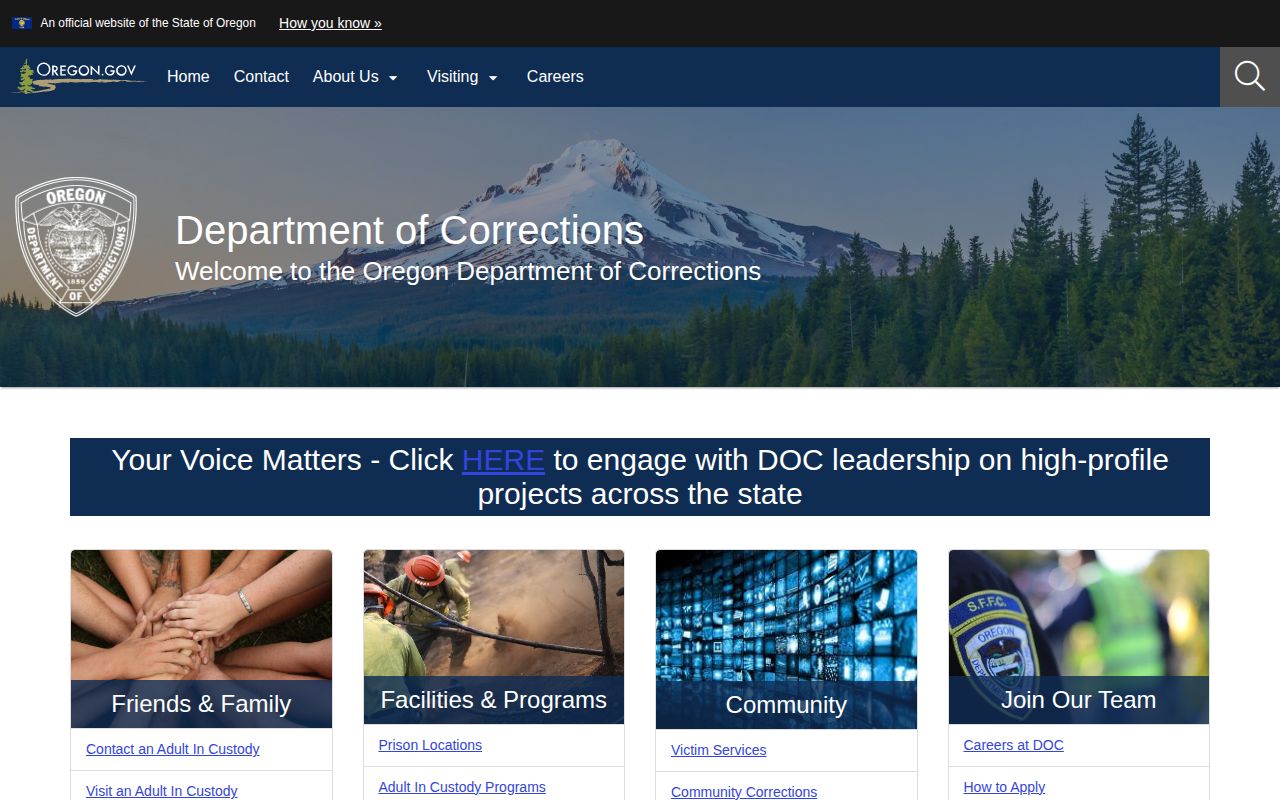
That agency route applies to state custody, not to a short county booking or a federal sentence.
Oregon Release Record Fields
A useful release record answers who, where, when, and under what authority. County forms and databases differ, so no single field set is promised across all 36 counties. Ask for the booking identifier, actual departure date, release reason, and destination or receiving agency when shown. For a state-prison departure, add SID, institution, sentence information, projected and actual dates, community-corrections location, and supervision or discharge documents.
| Field | What It Can Establish |
|---|---|
| Name and identifier | Links the event to a county booking number, Oregon SID, or other agency key. |
| Releasing agency or facility | Shows which custodian recorded the departure. |
| Actual release date | Records the completed event, unlike an earlier projection. |
| Release authority or reason | May distinguish court release, sentence completion, supervision, leave, or transfer. |
| Receiving agency | Shows whether another jail, DOC, BOP, or ICE took custody. |
| Supervision status and expiration | Separates physical release from the later end of parole or post-prison supervision. |
Does a roster disappearance prove release? No. It may reflect release, transfer, a data lag, or a search mismatch. Confirm the event with the record custodian and any receiving agency.
Request Oregon Release Records
Oregon Public Records Law places the request with the office that holds the document. A sheriff handles its jail booking and release material. DOC handles prison, sentence-computation, and Pen Pack records. The Board handles Board Action Forms and orders. The filing court supplies judgments and registers. A narrow request is easier to search and price than a demand for every record connected with a name.
- Identify the custodian and the custody layer. Use the Oregon County Directory for a local jail release.
- Give the full name, known booking number or SID, facility, and a focused date range.
- Name the fields sought, such as actual release date, release authority, receiving agency, final face sheet, sentence computation, or public discharge order.
- Ask for electronic delivery, a fee estimate, and a completion estimate before costly work begins.
- Request certification expressly when an official certified copy is needed.
DOC now directs requests and messages through its GovQA Public Records Center rather than its former records email addresses. Its published schedule lists clerical time at $25 per hour, managerial time at $40, and professional time at $75, plus applicable copy, media, and postage costs. Fees and exemptions should be checked when filing. Redaction may remove exempt or confidential facts.
The DOC Public Records Center explains the official-record route and the material that may appear in a Pen Pack.
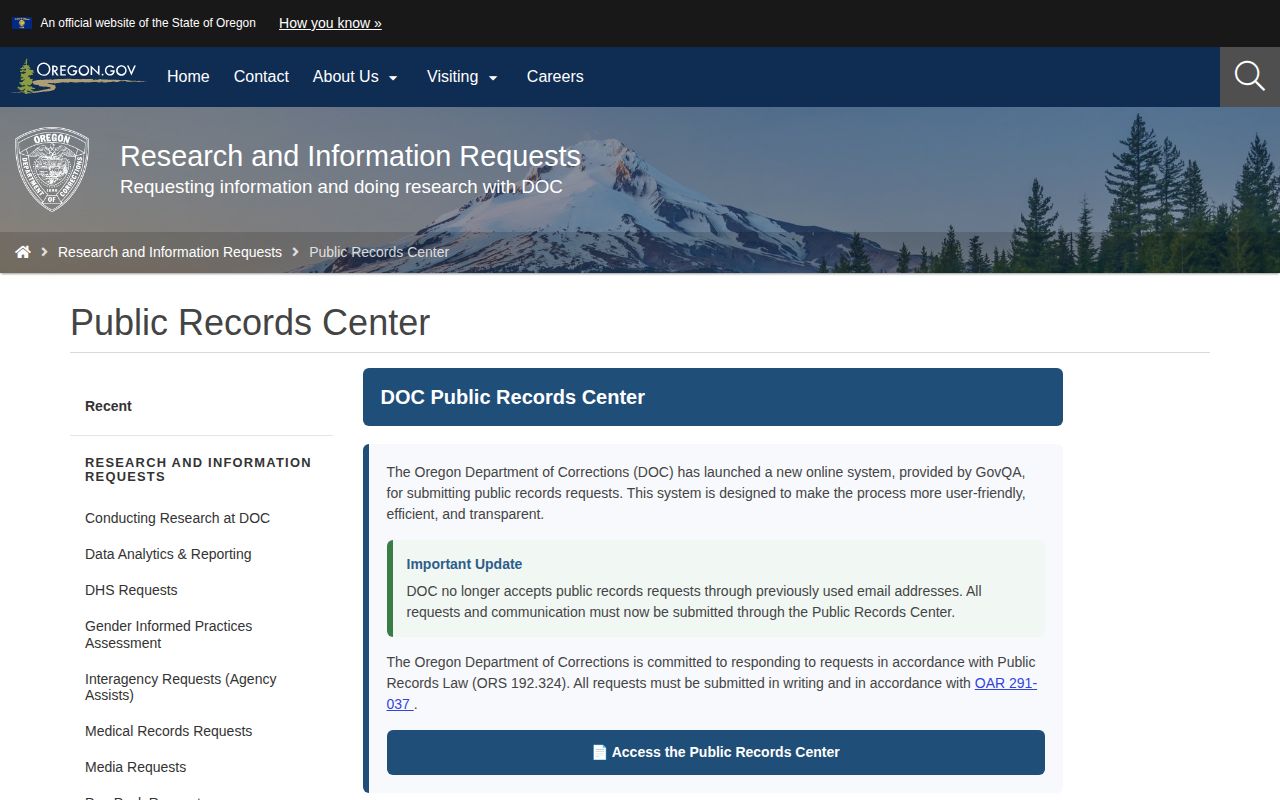
A Pen Pack may include public-information prints, face sheets, court or sentence orders, and parole-discharge material when those records exist.
Note: Acknowledgment confirms receipt of a request, not the date records will be produced.
Oregon Release Records Law
ORS 192.311 through 192.478 governs Oregon public records. ORS 192.314 states the general right to inspect nonexempt records. ORS 192.324 permits fees reasonably calculated to reimburse actual cost, while ORS 192.329 addresses completion estimates. These rules do not make every fact public. Juvenile, sealed, confidential, and exempt material may remain unavailable or be redacted.
Records rule: Send the request to the office that created or keeps the record. A statewide office cannot supply every county jail record.
Booking photographs have a separate rule. ORS 133.870 begins with a limit on law-enforcement disclosure and lists the permitted routes. A county booking image, OOS identification photograph, news-release image, and court exhibit are not interchangeable records. Set-aside or protected matters also change what a source can lawfully provide. Release verification should rely on status and event documents, not a photograph.
The research does not establish one statewide online retention window for every jail release. A live roster may drop a name long before the sheriff's underlying record reaches the end of its lawful retention period. A set-aside, sealed matter, or other restriction can also change public access without rewriting every older copy. Ask the proper custodian what is retained, what remains public, and which part has been withheld or redacted.
Oregon Prison Release Planning
Oregon publishes a countdown for state-prison release planning, but it does not promise a fixed gate-money amount or universal ticket. About six months before release, an adult in custody attends a pre-release program, with behavioral-health planning when applicable. Four to six months out, a release counselor discusses the release plan, transport, skills, county waivers, and Interstate Compact issues, then sends the plan for field review. Registration and health coordination occur when required.
At 75 days or less, the counselor checks the field investigation with Community Corrections. A parole officer may conduct a reach-in visit. Around 30 days, a benefits coordinator addresses health coverage. During the final one or two weeks, the counselor verifies the projected date, finalizes transport, and requests the person's own funds from Central Trust. Person-specific logistics belong with the institution and release counselor because another hold, an unapproved plan, or a changed date can alter the handoff.
Oregon Release Trends
DOC's May 19, 2026 Quick Facts reports 12,124 adults in custody and an average of 328 releases per month from April 30, 2025 through May 1, 2026. That monthly figure is a state-prison flow, not a count of county, federal, or immigration releases. Multiplying it by 12 yields an illustrative pace of 3,936, but DOC did not publish that number as an annual total.
The March 1, 2026 Community Population Profile counted 19,471 cases: 9,607 in the post-prison group, 9,605 probation cases, and 259 local-control cases. Those snapshots show why leaving a prison is not the same as leaving the corrections system. They also use different report dates and definitions, so their figures should not be merged into a live total.
Find Oregon Released Inmates
The strongest statewide search starts with the last known custodian and works outward. OOS is the state path for an Oregon prison sentence or active county community-corrections case. A sheriff is the source for a local booking. VISOR supplies current event and notification information from participating agencies. Court records explain the legal action, while BOP and ICE cover separate federal systems.
- Identify whether the last known custody was county, Oregon DOC, federal, or immigration.
- For DOC custody or current community supervision, search OOS by SID when known, or by first and last name.
- For county custody, check the correct sheriff's current or recent-release product, then request the release record if the person is absent.
- Compare VISOR status and the court register. Treat a transfer label as continuing custody.
- Use BOP for a federal sentence and ICE ODLS for civil immigration detention.
- Request an official record when the online sources conflict, omit history, or no longer return the person.
Important: A person who leaves a live jail roster may have been released, transferred, or removed from public display. Absence alone proves none of them.
Oregon DOC Offender Search
Oregon Offender Search, or OOS, covers people currently in DOC custody or a local Community Corrections office. A person who left prison for parole, post-prison supervision, probation, leave, or local control may still appear. Someone fully discharged from custody and supervision ordinarily falls outside the stated scope. OOS is not a permanent statewide archive of Oregon released inmates.
The OOS name and SID search combines every field entered. An incorrect extra term can hide a valid result.
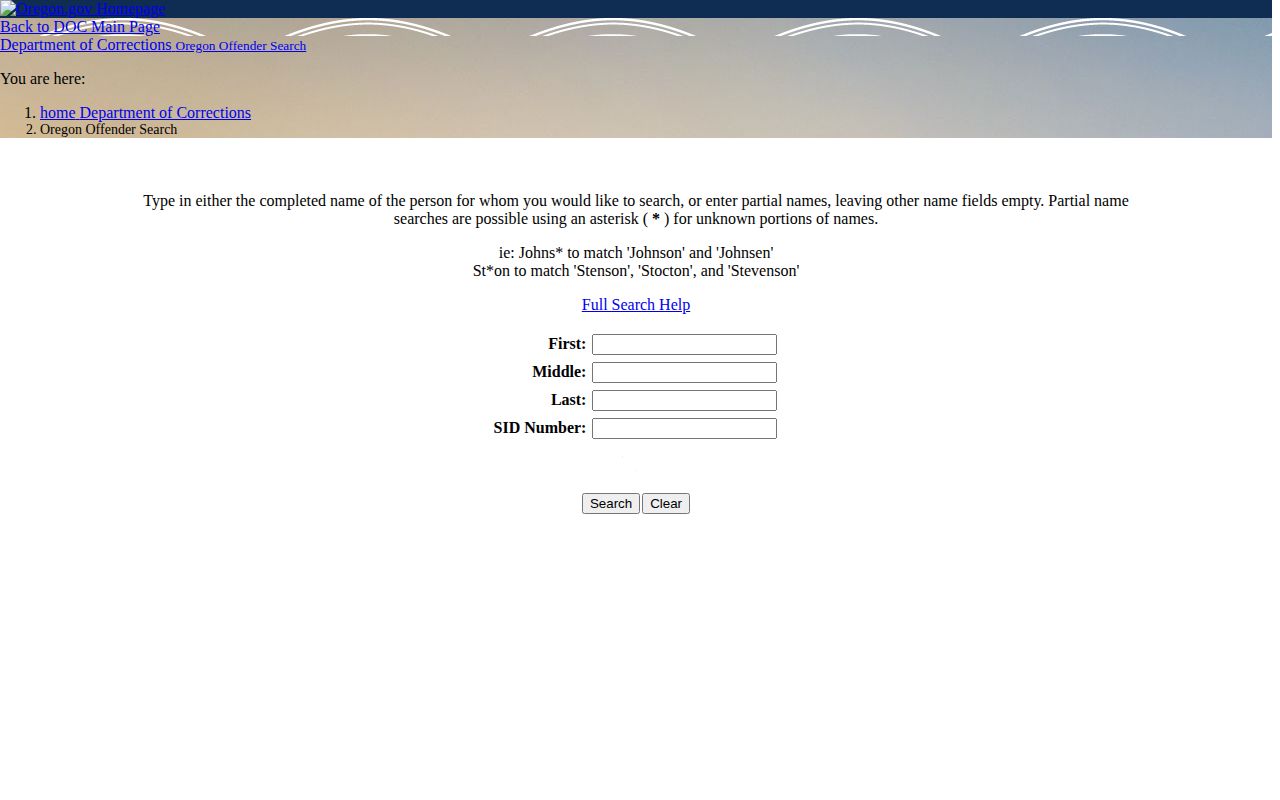
SID is the most precise key. Names accept an asterisk wildcard at the end or within a term, but SID does not.
| OOS Item | How to Read It |
|---|---|
| SID | Selects the individual record and reduces same-name errors. |
| First and last name | Supports wildcard searching; all entered fields must match. |
| Names tab | Explains alias matches when the detail header uses a court name. |
| Status and location | Helps separate prison placement from current community corrections. |
| Projected release date | A changeable computation, not proof that departure occurred. |
| Update notation | Shows when the displayed data were refreshed. |
Oregon Release Search Limits
OOS deliberately reports a current correctional relationship. Its help page says the displayed offenses are tied to the current incarceration, not a complete lifetime charge or sentence history. A no-match can mean spelling is wrong, an identifier is wrong, the record changed, or the person fully discharged. It does not prove a release date.
The official OOS help page defines that current-custody and current-supervision scope.
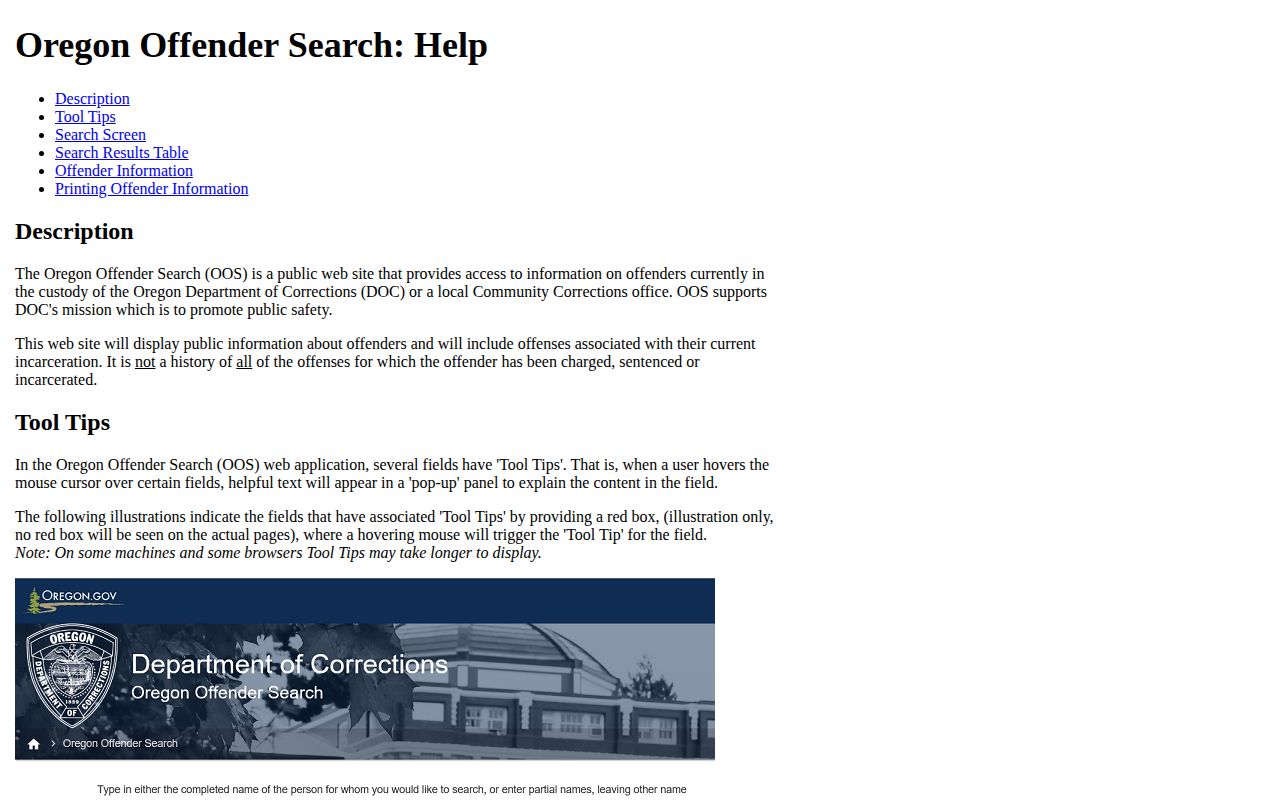
When a former case has left OOS, the court judgment and DOC record become central rather than optional.
The OOS disclaimer screen also warns that periodically updated data are not an official record.
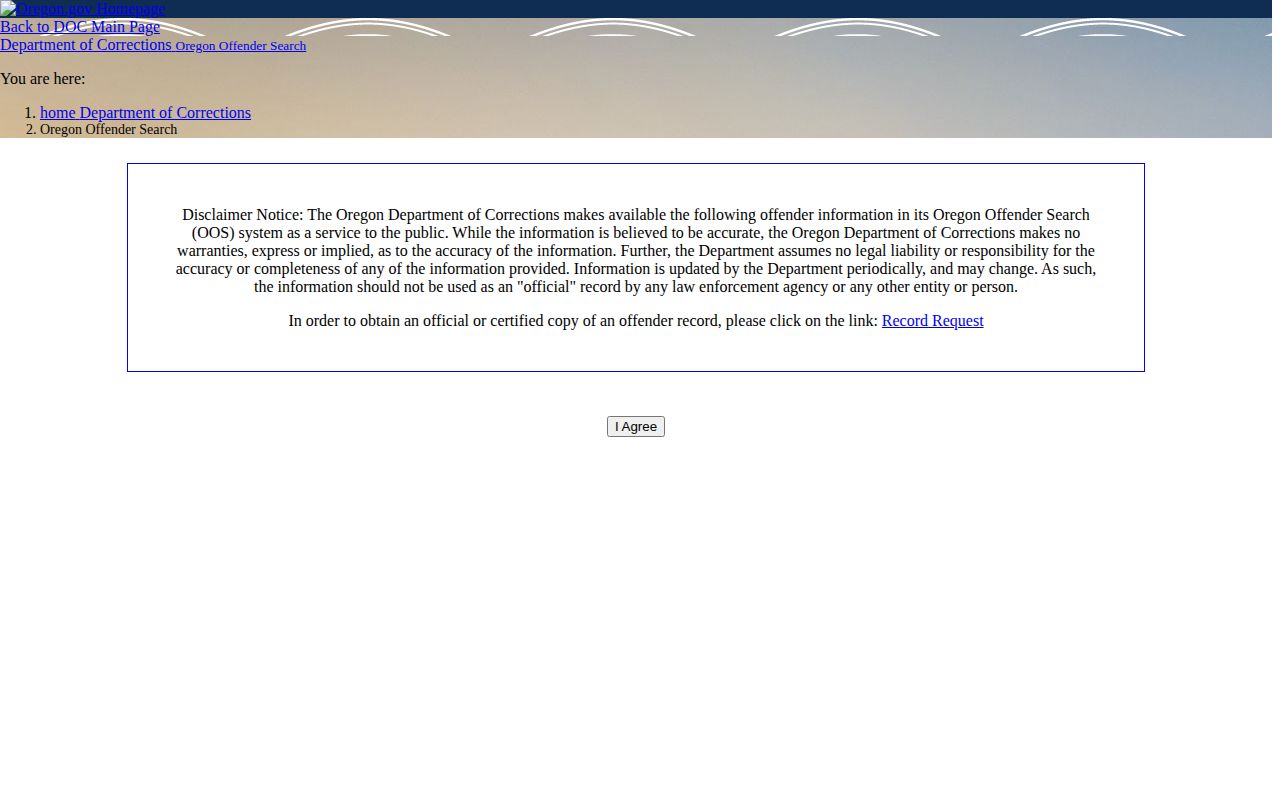
Capture the update date and verify a claimed departure through VISOR, the responsible community-corrections office, or a certified request.
Oregon County Release Variations
Oregon has no reliable synthetic list that merges all county releases. The 36 county research files show current-only rosters, 24-hour products, 31-day reports, daily PDFs, and counties with no online roster. These tools also use different fields and refresh windows. Combining them would create the false appearance of one official statewide release feed.
Contract beds add another layer. A person can be held in another county while the sending county keeps case responsibility. NORCOR serves several counties from one physical complex. Other counties rent beds or route transfers elsewhere. Start with the county tied to the arrest or case, identify the physical facility, and ask both agencies when custody ownership is unclear. A departure from the sending county's view may be a transfer rather than freedom.
Oregon Release Alerts Through VISOR
People searching for “VINELink Oregon” should use VISOR, the Victim Information System in ORegon. VISOR supports an individual search and notifications by phone, email, or text. It can show custody status and date, earliest release information, location, and the reporting agency. A result or alert applies to that agency's event. It cannot rule out a same-day transfer or another hold.
The current Oregon VISOR search is the official destination for this statewide notification service.
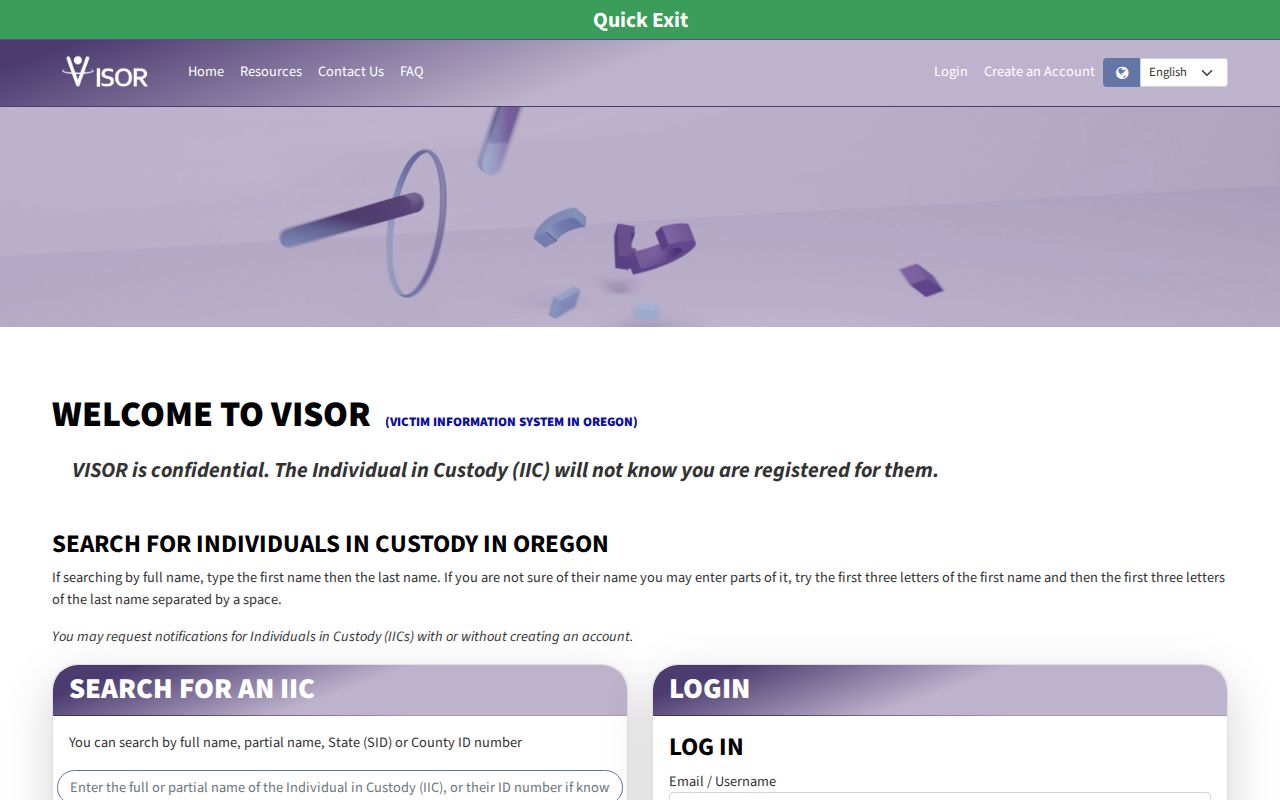
Compare the listed identifier and agency before treating a same-name result as the right person.
The VISOR guest-registration screen permits alert registration without creating a full account.
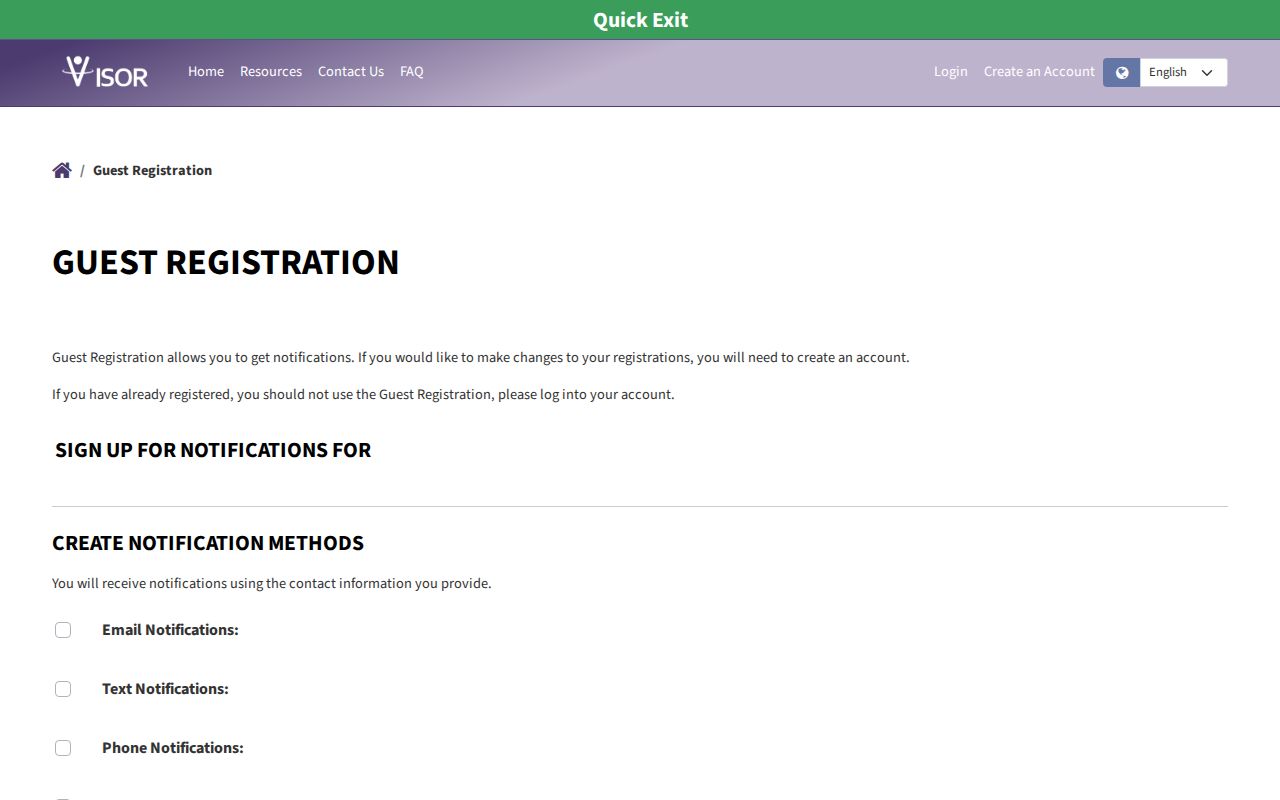
Follow the live confirmation steps. Do not reuse the old VINE four-digit PIN instructions for the current service.
DOC says VISOR processes notifications about every two hours, so “near-real-time” is more accurate than “instant.” An Offline Jails notice means a linked jail is not transmitting normally. It is not proof of a mass release. VISOR questions can be directed to 855-691-6246, while urgent custody confirmation belongs with the jail.
Oregon Release Court Records
Oregon Judicial Department records answer a different question from corrections data. A judgment sets out the sentence. A register may show a release order, amendment, revocation, dismissal, or later terminating order. Neither necessarily records the physical minute that a jail or prison released someone. Conversely, a jail departure does not establish that a charge ended.
The free Records and Calendar Search provides basic circuit, Tax Court, Court of Appeals, and Supreme Court information, subject to protected-case limits. OJCIN OnLine is a paid subscription with registers and judgments across all 36 circuit courts plus tax and appellate courts. Courthouse terminals provide another route, and copies come from the court where filed. Juvenile and other confidential matters do not belong in an ordinary public search.
Community supervision is also decentralized. Search OOS or VISOR first, then contact the county community-corrections partner shown by the record. For formal dates or conditions, request the Order of Supervision, Board record, or court order. The statewide structure may involve a sheriff, community justice office, community corrections department, or regional agency.
The Oregon Board records route supplies Board Action Forms, orders, and eligible decision material.
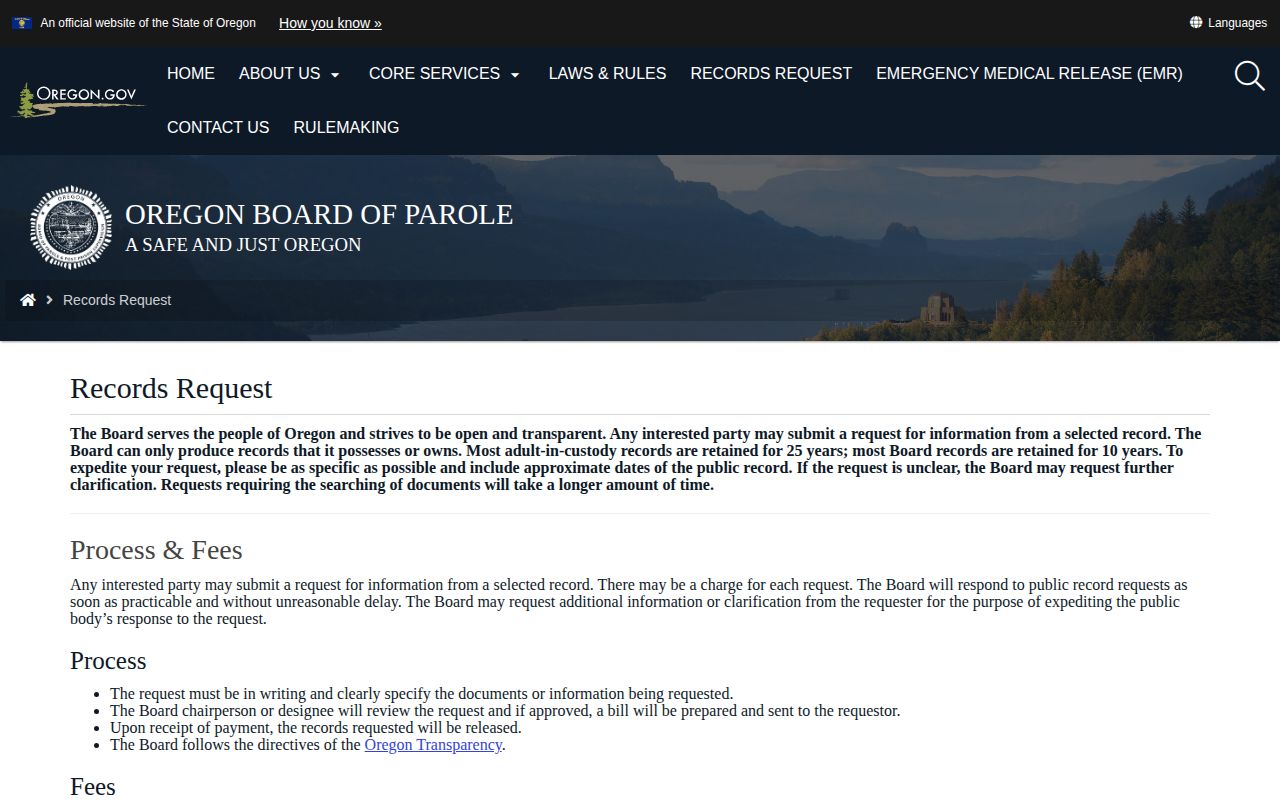
A scheduled hearing or projected parole date is not the same as a signed action and completed release.
Federal Releases in Oregon
Federal custody is outside OOS. The Bureau of Prisons Inmate Locator generally covers federal inmates released after 1982. Search by BOP Register, DCDC, FBI, or INS number when known, or use name and optional identifying fields. A result may say “Released,” provide a date, or state “Not in BOP custody.” That wording concerns BOP custody only. It does not prove that federal supervision ended or that another agency did not receive the person.
The official BOP Inmate Locator is the right custody source for a federal sentence, including a person tied to FCI Sheridan.
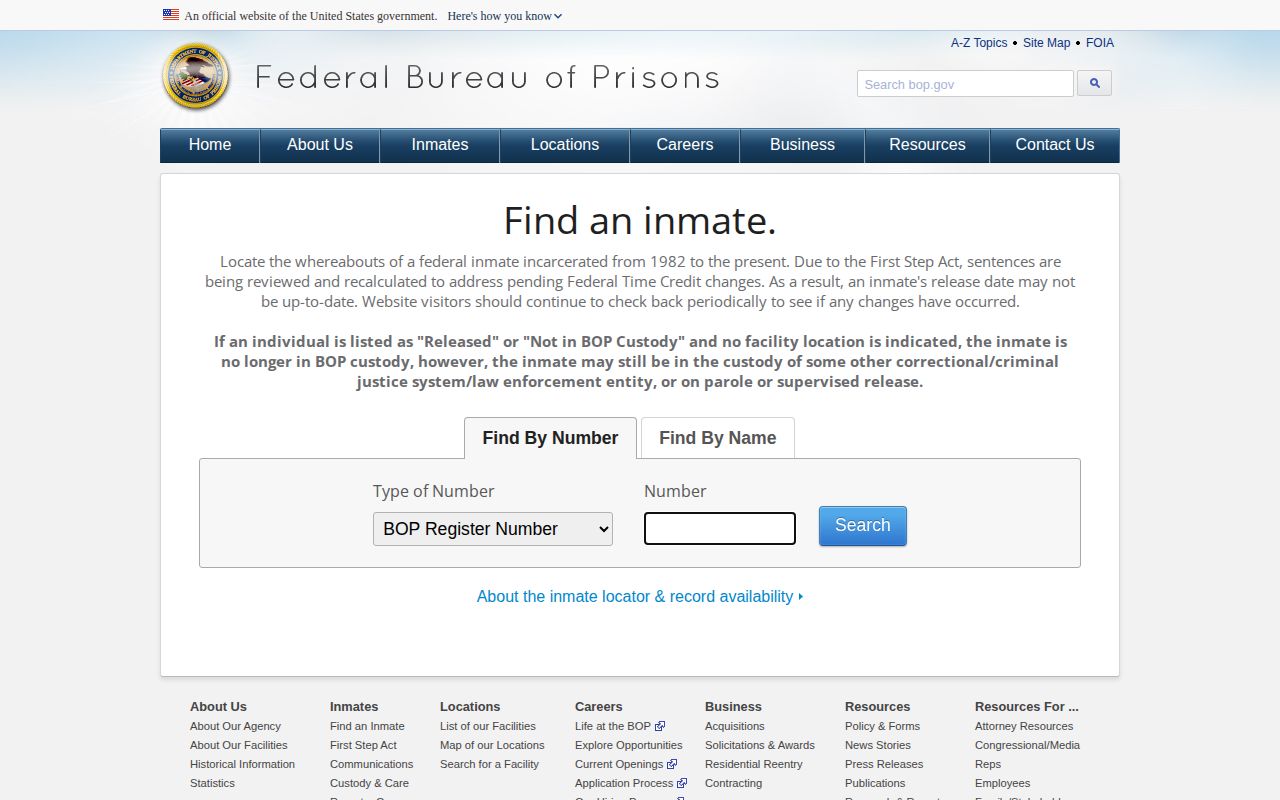
A residential reentry placement can still be BOP custody, so read the status rather than assuming physical location equals release.
ICE civil detention uses the Online Detainee Locator System. Search by A-number and country of birth, or by the biographical fields the interface permits. ODLS is not a complete historical release archive. A county record marked “release to ICE” describes a transfer between custodians. If no match appears, verify the county release record and contact the appropriate ICE office without drawing conclusions from absence.
Oregon Custody Status Sources
Each source covers only its own slice of Oregon released inmates. Use the record closest to the event, then compare it with the legal and downstream records. The table keeps current custody, physical release, supervision, and final discharge separate.
| Source | Best Use | Main Limit |
|---|---|---|
| County jail roster | Check current local custody. | Many rosters remove released people and lack history. |
| County release record | Confirm the end of one local booking and its stated reason. | Transfer can be recorded as departure from that jail. |
| OOS | Check current DOC custody or local Community Corrections. | Not a permanent fully discharged archive. |
| VISOR | Check reported status and register for event alerts. | Periodic updates and offline jails can cause delay. |
| Court record | Read the judgment, disposition, and later orders. | May not show the physical release moment. |
| BOP or ICE locator | Check the relevant federal custody system. | Neither establishes freedom from every other agency. |
Note: The originating office's certified record controls when a public search and an agency record disagree.