
Oregon VINE Is Now VISOR
People still search for VINELink Oregon, but the current state destination is VISOR. The name stands for Victim Information System in ORegon. Oregon DOC provides the service for individual searches and notifications. It brings together data reported by connected custody and supervision agencies, including county-jail and state corrections information where supplied.
The current Oregon VISOR individual search shows the live starting point.
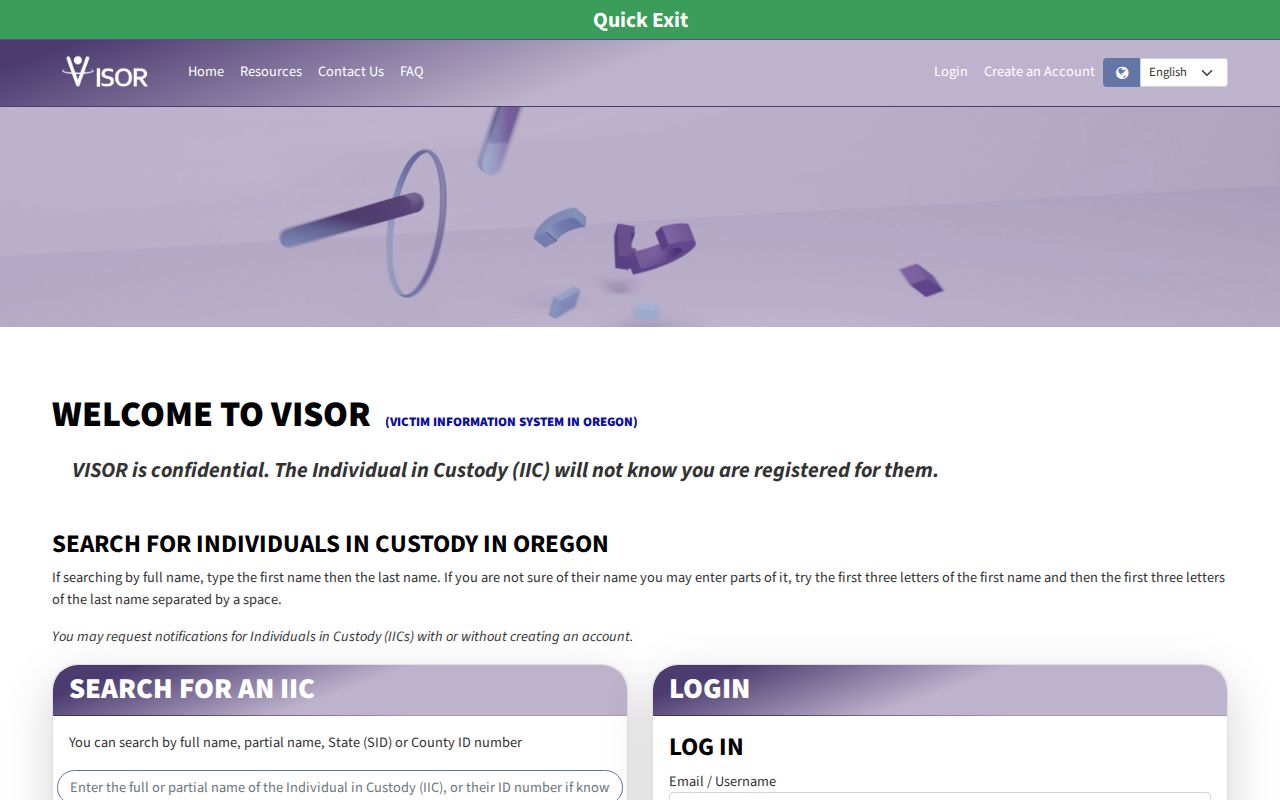
The agency and identifier on a result matter as much as the displayed name.
VISOR is not a synthetic statewide recent-release list. Oregon counties publish different roster windows, and a connected jail can have a transmission problem. A person may also leave one jail because of a transfer, not community release. Search one named person and follow the custody chain.
Search an Oregon Inmate in VISOR
Begin with the strongest identifier available. A name can produce several people, while a SID or county identifier can help separate records. Compare the listed agency, location, status, and dates before treating the match as the right person. A partial or similar name alone is not enough.
- Open VISOR and choose the individual search.
- Enter the available name and identifier fields without adding facts that may be wrong.
- Review all matches and compare the SID or county ID, agency, and location.
- Open the matching record and note the status date, custody status, earliest release date, and reporting agency fields that appear.
- When the result reports a release or movement, contact the listed agency if the actual destination must be verified.
Oregon Offender Search can provide a second state check for a person currently in DOC custody or local Community Corrections. A county sheriff or regional jail remains the custodian of its booking and release record. If VISOR does not settle which county owns the event, route by locality through the county agency.
Note: A VISOR event reports the participating agency's change and does not rule out another custodian or same-day transfer.
Oregon VISOR Release Fields
The information page explains custody status and date, earliest release date, location, and related record concepts. Not every field answers the same question. An earliest date is prospective. A custody-status date tells when a status applies within the service. A location identifies the reporting placement or agency but may not describe all legal holds.
| VISOR field | How to read it |
|---|---|
| Name and identifier | Confirm the record belongs to the intended person |
| Custody status | The status supplied by the reporting agency |
| Status date | The date linked to that reported state |
| Location or agency | The custodian or supervision source shown by VISOR |
| Earliest release date | A prospective date, not proof that release happened |
| Notification options | Available channels for future event alerts |
A released result does not prove final discharge from all correctional authority. The person may remain on parole, post-prison supervision, probation, leave, or local control. Likewise, a jail release to DOC, ICE, another county, or federal custody is a transfer between custodians.
Register Oregon VISOR Release Alerts
VISOR offers both account and guest registration. The current brochure describes phone call, email, and text notification methods. Choose the live registration route attached to the correct record and follow the security or confirmation prompts displayed by VISOR. Do not substitute steps from an old Oregon VINE brochure.
- Open the confirmed person's VISOR record and select registration.
- Choose guest registration for a notification without a full account, or create an account when account tools are preferred.
- Select the contact method or methods offered by the current form.
- Enter and confirm the contact details using the live security steps.
- Retain the current registration confirmation and update contact details when they change.
The VISOR guest-registration page provides a route without a full account.
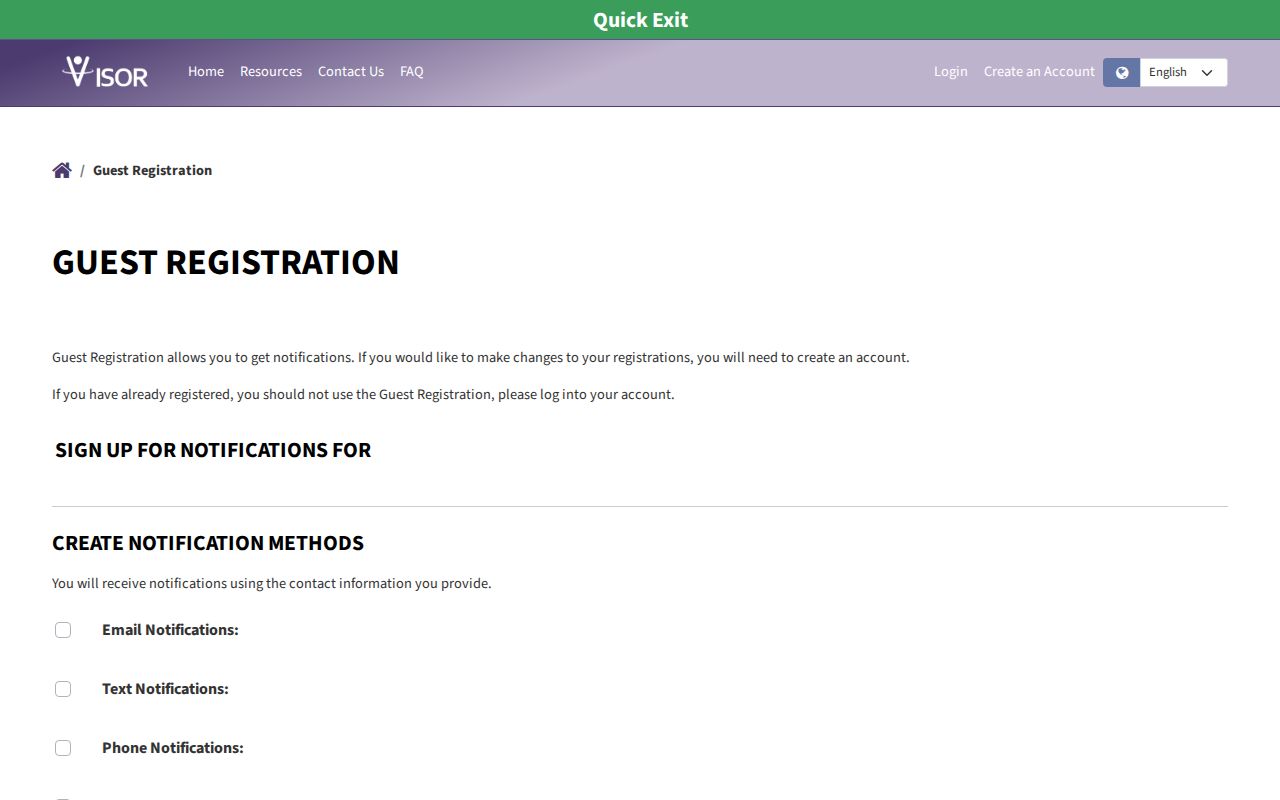
Account creation is also available through VISOR when a user wants the features tied to an account.
Older VINE materials may describe a four-digit telephone PIN. That is historical Oregon guidance and should not be stated as the current VISOR process. Use only the confirmation and security instructions visible in the current interface.
Oregon VISOR Alert Timing
DOC's sentence-recalculation FAQ describes VISOR notifications as processing approximately every two hours. Near-real-time is accurate. Instant is not. A release can also require physical processing after a legal order, and a transmission delay may occur between a local jail and the statewide service.
A date-change alert and a release alert answer separate questions. DOC directs the public to OOS for the current projected prison release date. VISOR reports changes, movements, and release events through its notification process. An official DOC record proves the agency's final record. Keep all three layers distinct.
The OOS help page explains the current-custody and current-supervision scope of that companion system.
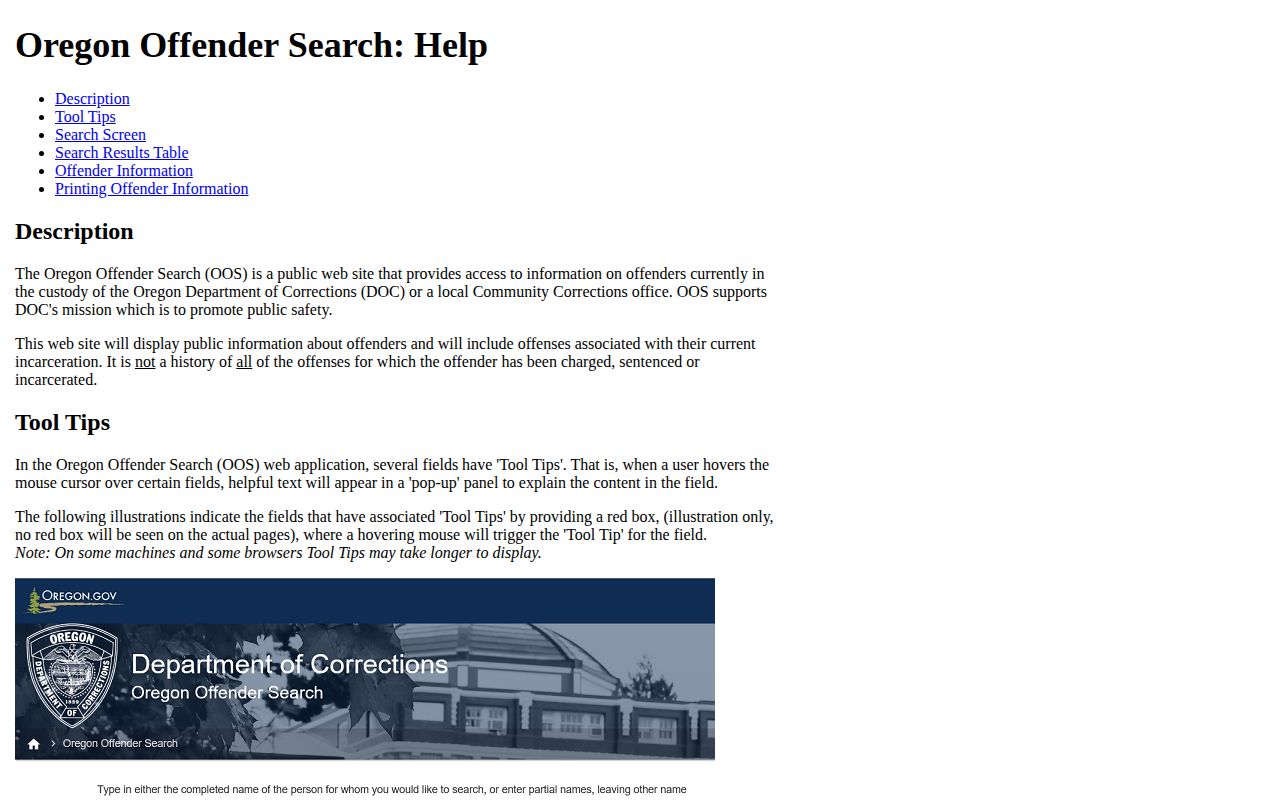
A person may leave prison and remain in OOS because community supervision is still active.
Note: Save the alert time and then confirm the event with the listed jail, DOC, or community-corrections office.
Offline Oregon Jails in VISOR
VISOR can display an Offline Jails notice when a connected jail is not transmitting normally. The notice describes a system status. It does not mean all people held at that jail were released, and it does not turn a missing record into proof of release.
For an urgent county-jail check, contact the jail directly and ask about the named booking or release event. If the person was transferred, identify the receiving agency. For notification, site, or record questions, VISOR lists 855-691-6246. Emergencies and immediate safety issues belong with local law enforcement or 911.
Once the feed returns, an event can still need agency confirmation. County release records may carry the actual departure date, release type, and receiving custodian. Oregon's county practices range from current-only rosters to dated reports and no public online roster, so one VISOR gap cannot be filled with a made-up statewide list.
Limits of Oregon VINE Checks
VISOR data are periodically updated and are not an official custody record. A no-match can result from spelling, identifier, reporting scope, a data issue, or a completed event. It should not be described as proof that a person is free from all custody. Juvenile and other confidential records also are not ordinary adult-search material.
VISOR does not replace the federal Bureau of Prisons locator. Federal custody at FCI Sheridan and elsewhere must be checked through BOP. Nor does VISOR replace ICE's Online Detainee Locator System for civil immigration detention. A county-jail line showing transfer to ICE is not community release.
The official BOP Inmate Locator is the correct federal search.
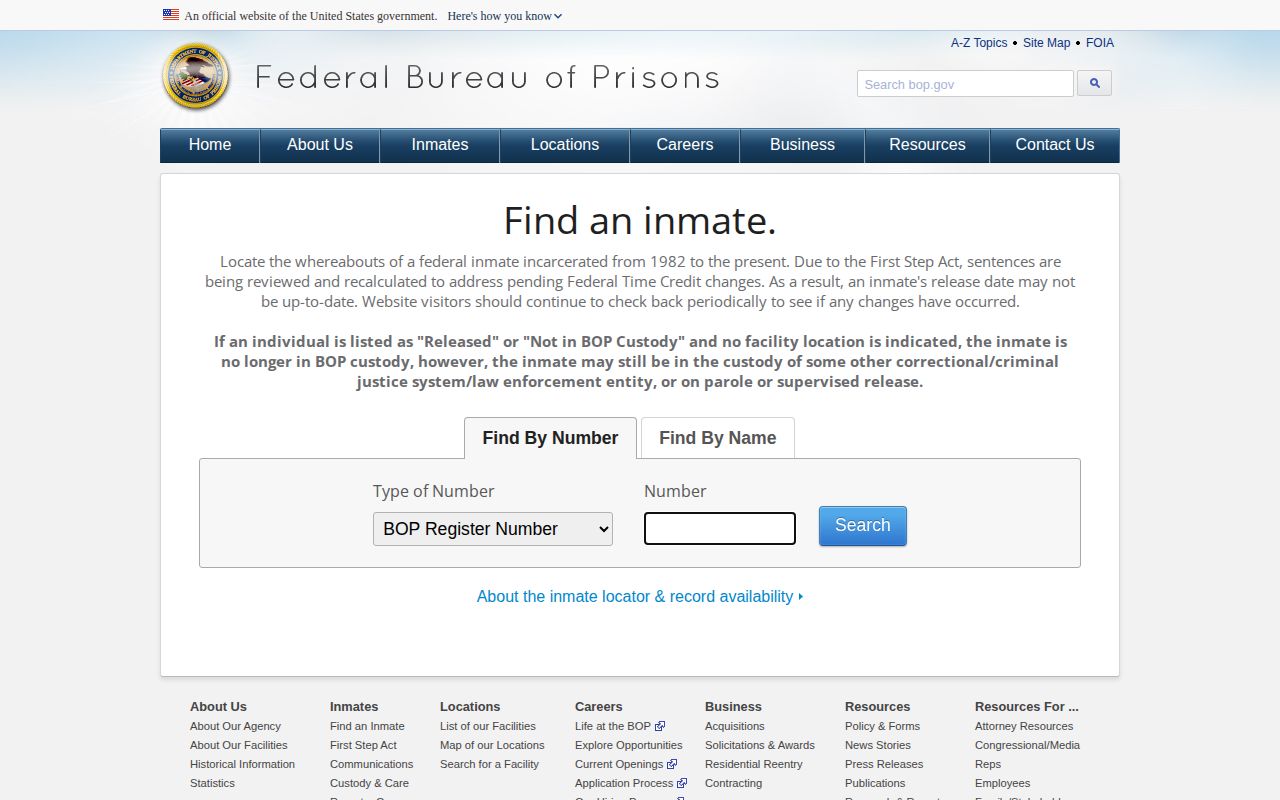
A BOP result such as Released or Not in BOP custody speaks only to BOP custody, not every other authority.
For ICE, search by A-number and country of birth or use the biographical fields allowed by the live interface. A no-match is not a full historical release record. Check the sending county release record and contact the appropriate ICE office when needed.
Confirm an Oregon VISOR Release
Start with the source that owns the event. A county sheriff or regional jail owns its booking and release record. Oregon DOC owns a state-prison custody event and sentence record. The Board owns its actions and orders. A court owns its judgment and register. BOP and ICE require their own federal locators.
For a DOC case, compare VISOR with OOS. OOS may show the person in a Community Corrections location after physical release, which supports an active supervision finding rather than final discharge. When OOS no longer returns the person, request the official DOC record or Pen Pack. Absence alone is not a discharge certificate.
The DOC Public Records Center is the certified-record and Pen Pack fallback.
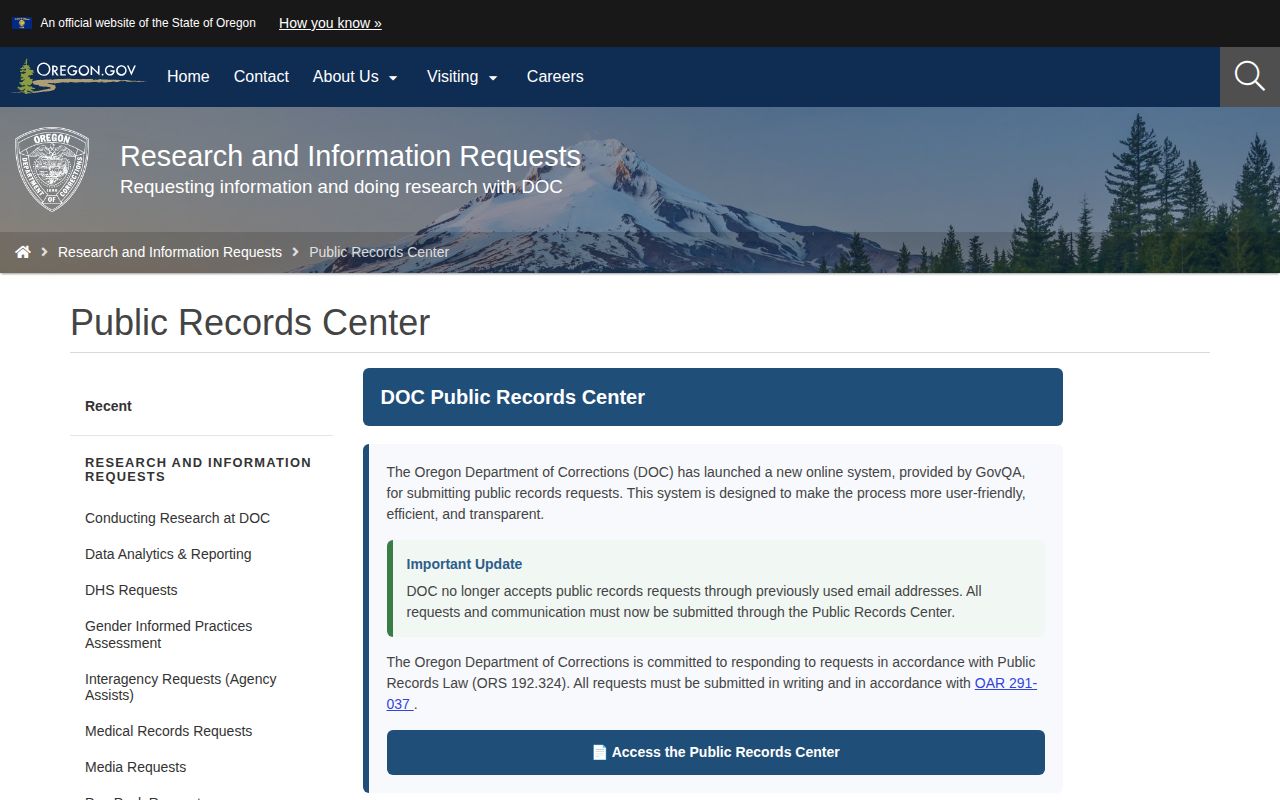
A focused request can seek the actual release date, release authority, transfer destination, and public discharge material.
Confirmation works best when the question is narrow. Ask whether the person left the named facility, when that facility recorded the departure, which release type or authority was entered, and whether another agency received the person. A county jail can answer its booking event but cannot certify a later DOC discharge. DOC can answer its prison event but does not replace a county court's register. VISOR support can address notification or site questions, yet the reporting custodian owns the official record. Keep the alert, note its delivery time, and match it to the custodian's response. If the agency reports a transfer, continue with the receiving locator instead of calling it community release.
A current supervision result also needs precise wording. OOS or VISOR may show a community-corrections agency after prison release. That supports the statement that physical prison custody ended and an active community status appears, when the identifiers match. It does not show unconditional freedom or final discharge. For that later fact, seek the Board order, DOC discharge material, or court termination record appropriate to the case. If a screen and formal record disagree, compare update dates first. Periodic data can trail a signed action, while an old saved image can predate a later revocation or transfer.
The full statewide search chain is available on the Oregon released inmates page. It distinguishes county, state, federal, immigration, court, and supervision records.
Oregon Alerts Versus Projections
A projected release date is a sentence-computation snapshot. An alert is a reported custody event. A certified record is the agency's official proof. Oregon makes the distinction especially important because DOC directs date questions to OOS while VISOR processes notifications on its own cadence.
If a projection changes, save the new date and its update notation. Do not report that a person was released merely because an old projected day passed. If an alert arrives, read whether it says release, transfer, or another change. Then confirm the new status with the reporting agency.
A same-day chain can involve several agencies. DOC can release a person to county community corrections, another jurisdiction under a detainer, or another authorized placement. VISOR may capture one event without stating every legal consequence. A court judgment or Board order may explain why the move was authorized, while the custody record explains what physically occurred.
Public Record Search
Sponsored Results