
Oregon Board Hearing Authority
The statutory name is the State Board of Parole and Post-Prison Supervision. Its website uses the shorter brand Oregon Board of Parole. The Board sets or reviews release-related matters only where Oregon law gives it authority. Its work includes older matrix or discretionary sentences, dangerous-offender cases, murder review, some juvenile-offender reviews, and supervision violations.
That jurisdiction is narrower than the public term parole board may suggest. Many modern determinate sentences do not require the same type of parole hearing. A sentencing judgment and ORS chapter 144 determine which path applies. DOC computes prison dates, while the Board decides matters assigned to it. County community corrections may later supervise a person in the community.
The Oregon Board Hearings page identifies the Board's hearing types and hosts its rolling schedule.
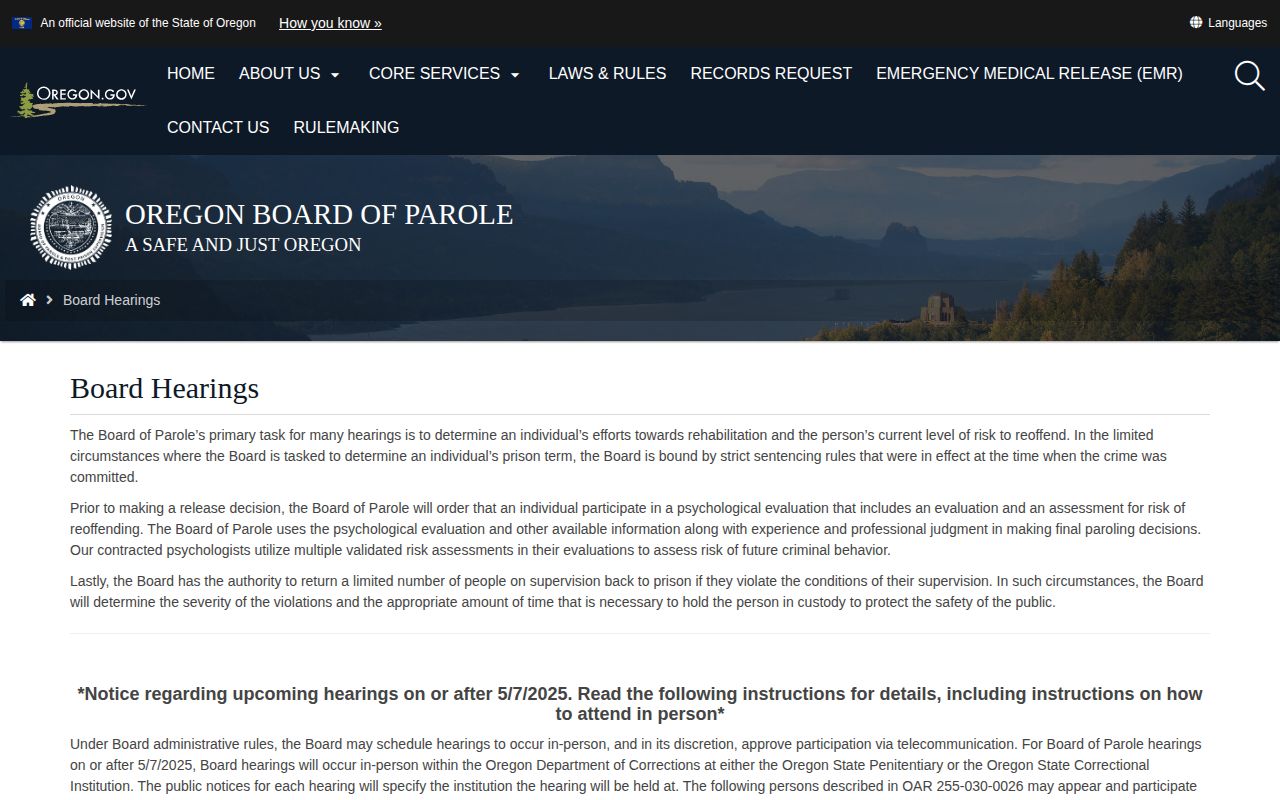
The live page is the operational source because no fixed daily, weekly, or monthly posting cadence was verified.
Search Oregon Parole Hearing Schedule
Start with the named-person hearing calendar, not the separate public-events calendar. The latter covers public events and meetings, while the hearing schedule identifies case hearings. Downloaded copies age quickly, so check the live page each time and record the date of access.
- Open the Board Hearings page and review the current rolling calendar.
- Find the person's name and compare any identifier, institution, date, and hearing label shown. Do not rely on a name alone when several people share it.
- Read the hearing code against the Board's own description. PT, EIPS, MR, PH, and FD do not mean the same proceeding.
- Open or retain the notice for participation and location instructions. Each hearing notice controls its event.
- After the listed date, request the final Board Action Form, order, or other decision record. The calendar is not a results database.
For hearings on or after May 7, 2025, the Board says proceedings occur in person within DOC at Oregon State Penitentiary or Oregon State Correctional Institution, with the specific place on the notice. Certain victims, representatives, district-attorney representatives, and qualifying support people may request remote participation under OAR 255-030-0026. Public attendance is in person and is subject to advance DOC screening and current procedures.
Note: Always follow the individual notice because attendance rules, screening steps, and location details can change.
Oregon Parole Hearing Codes
Oregon's hearing vocabulary carries real information about sentencing eras and legal posture. A code is not just an office shorthand. It can signal whether the Board is setting a term, reviewing readiness, considering an older discretionary parole case, addressing prison misconduct, or deciding what follows a revocation.
| Code | Board description | Release significance |
|---|---|---|
| PT | Prison Term hearing | May establish a projected parole release date in an applicable case |
| PR | Personal Review | A review stage, not automatic release |
| PCRP | Dangerous-offender parole consideration | A denial typically leads to later consideration |
| EIPS | Exit Interview for matrix-system or murder cases | May affirm or defer a projected date |
| MR | Murder Review | Review under the governing murder-case framework |
| PP | Postponement for prison misconduct | Can affect timing |
| PH | Older discretionary Parole Hearing | May set a parole date under that system |
| FD | Future Disposition after revocation | Addresses possible rerelease |
PT, EIPS, PCRP, MR, PH, PP, and FD are therefore not interchangeable labels. An EIPS date does not mean the person leaves prison that day. An FD proceeding follows a revocation context. A PH applies to an older discretionary framework and is not evidence that all Oregon prisoners receive parole review.
Request an Oregon Parole Decision
No official public person-name database of Oregon Board decisions was found in the statewide research. The reliable route for an individual result is the Board's Records Request page. Ask for the final record instead of guessing from a calendar entry that later disappears.
- Gather the person's full name, SID or other identifier if known, hearing date, and hearing type.
- Use the Board Records Request route and describe a narrow date range.
- Ask for the Board Action Form, signed order, final decision, and hearing audio if public and needed.
- Read the action date, code, projected date, and conditions without merging them into one release date.
- Compare the decision with OOS, VISOR, and the actual DOC release or transfer record.
The Board decision and order request route is the official individual-result channel.
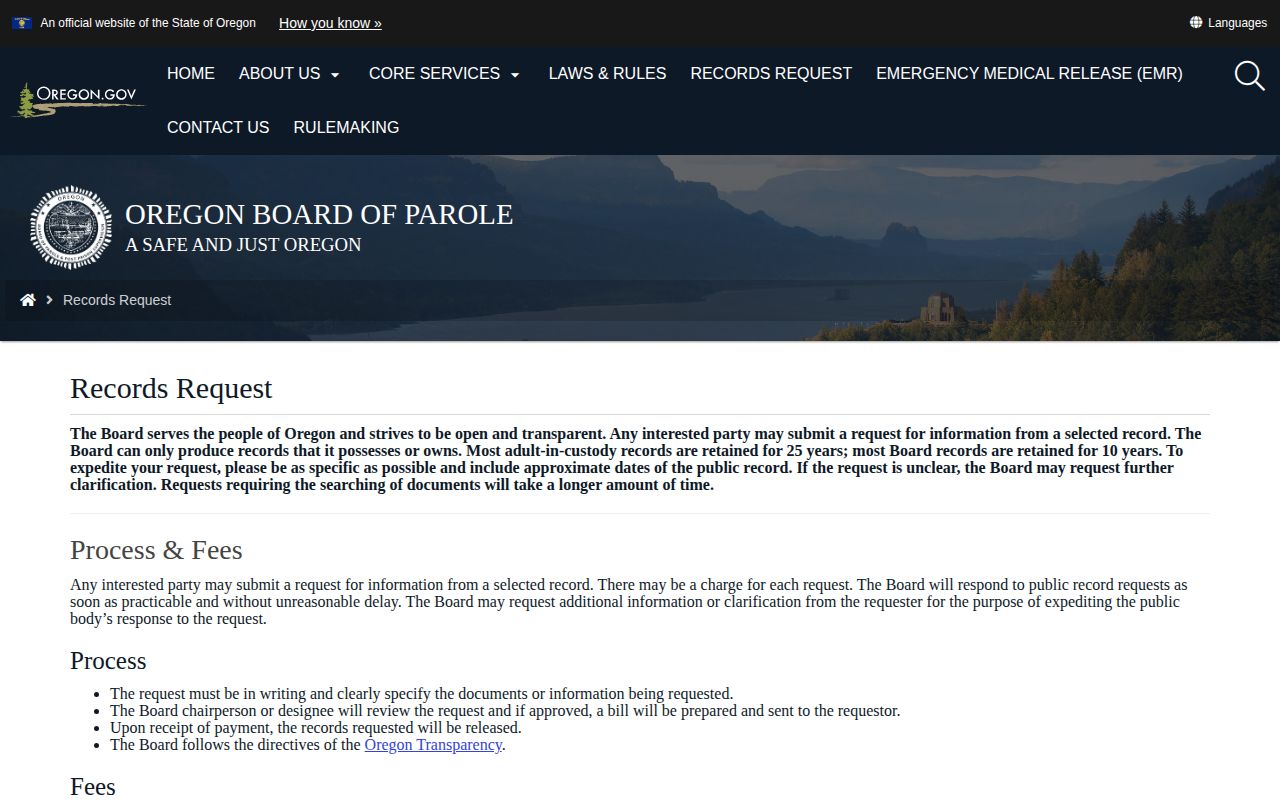
A focused request can seek the BAF, final order, and public hearing material for the named event.
The Board's BAF key helps decode form fields, including dates tied to good-time calculations and custody or supervision events. Still, the key is not the person's decision. The completed form and order control the case-specific reading.
Oregon Board Outcomes Explained
A hearing result is one part of a longer chain. The Board may make a favorable finding yet set a future date. It may affirm a projected date, defer action, postpone a date after misconduct, or later address revocation. Another jurisdiction's detainer can also change where the person goes when DOC custody ends.
| Result concept | What it establishes | What to check next |
|---|---|---|
| Date set or affirmed | The Board has acted on a projected parole date | Final order, OOS projection, actual DOC event |
| Denied | The requested favorable finding was not made | Order and next review rules |
| Deferred or continued | The matter remains for later action | New notice or order |
| Postponed | Timing changed, including for applicable misconduct review | Signed action and updated date |
| Revocation disposition | The Board addresses custody after a supervision revocation | FD action and rerelease status |
A receiving detainer may cause transfer to another custodian rather than community release. Verify the custody chain through DOC, the receiving agency, and the court record when applicable.
Oregon Parole Hearing Eligibility
There is no universal Oregon parole eligibility date. Eligibility depends on the offense, age at the time of the offense, sentence, date, judgment, and the part of ORS chapter 144 that governs the case. Older matrix sentences, murder or aggravated-murder cases, dangerous-offender terms, and modern determinate sentences follow different rules.
One clear statewide rule appears in ORS 144.397. It makes a person serving a sentence for an offense committed while under 18 eligible for a release hearing after 15 years, despite specified mandatory or determinate provisions. The statute defines that period without earned-time reduction. That example should not be applied to an adult offense or a different statutory hearing.
Use the judgment to identify the conviction statute and sentence. Then match the Board's hearing description and controlling law. A projected date in OOS is not a substitute for eligibility analysis, and an old calendar cannot override a later court or Board action.
Verify Oregon Release After Hearing
After a favorable Board action, separate four dates: the hearing date, action date, projected parole date, and actual DOC departure. They can differ. A status may then move to parole or another community-supervision label, which means the person is out of physical prison custody but still under correctional authority.
The OOS official-record warning explains that public data are periodically updated and are not the certified record.
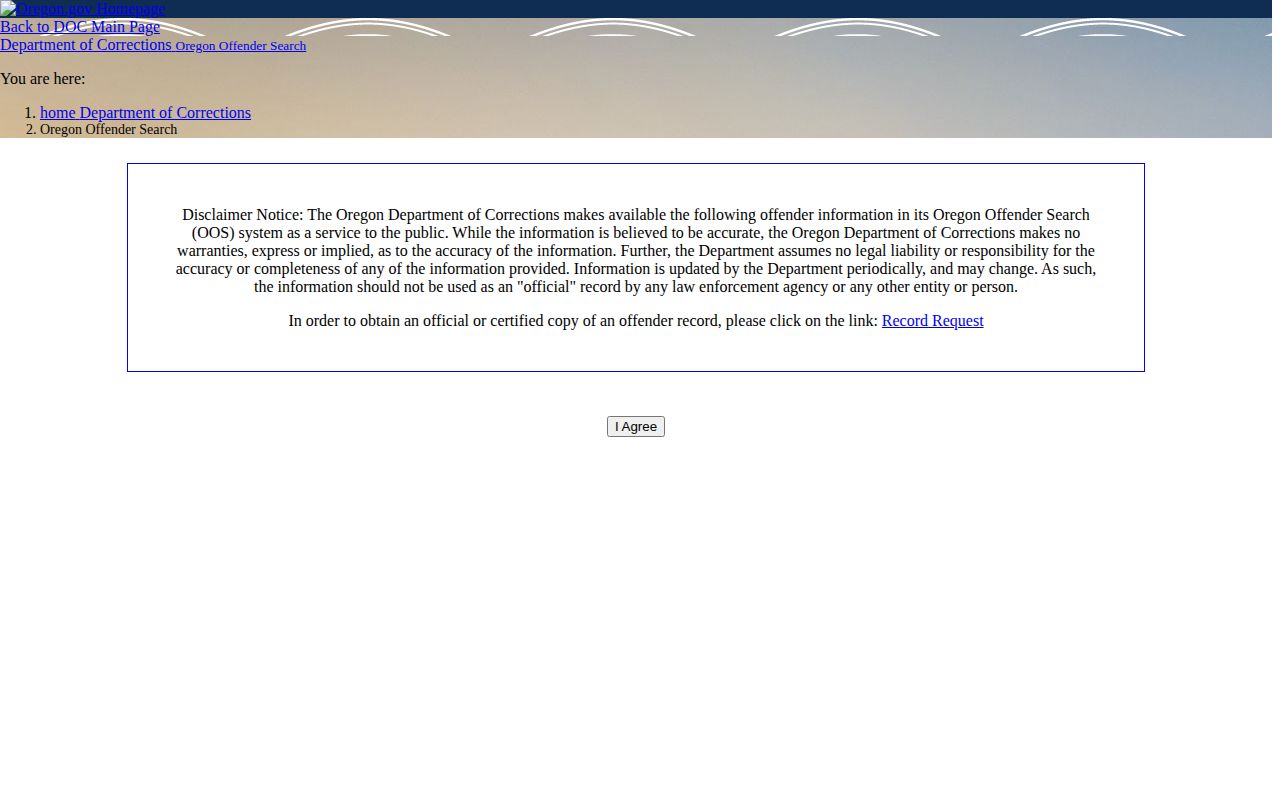
Use OOS as a current public snapshot, then obtain the formal action when proof matters.
VISOR can report a custody change or release event. DOC describes its processing as about every two hours, so the alert is near-real-time rather than instant. Neither a VISOR notice nor an OOS location rules out a detainer or receiving agency. Contact the listed custodian when the next destination must be known.
The broader distinction between release and ongoing authority is developed on the Oregon Post-Release Supervision page. A person can leave prison through Board action and remain on parole.
Oregon Board and DOC Records
Board records and DOC records answer different parts of the same event. The Board supplies its action, order, and eligible public hearing materials. DOC holds sentence computation and the actual prison-custody record. The sentencing court holds the judgment that defines the legal sentence.
The DOC Public Records Center is the Pen Pack and certified-record fallback.
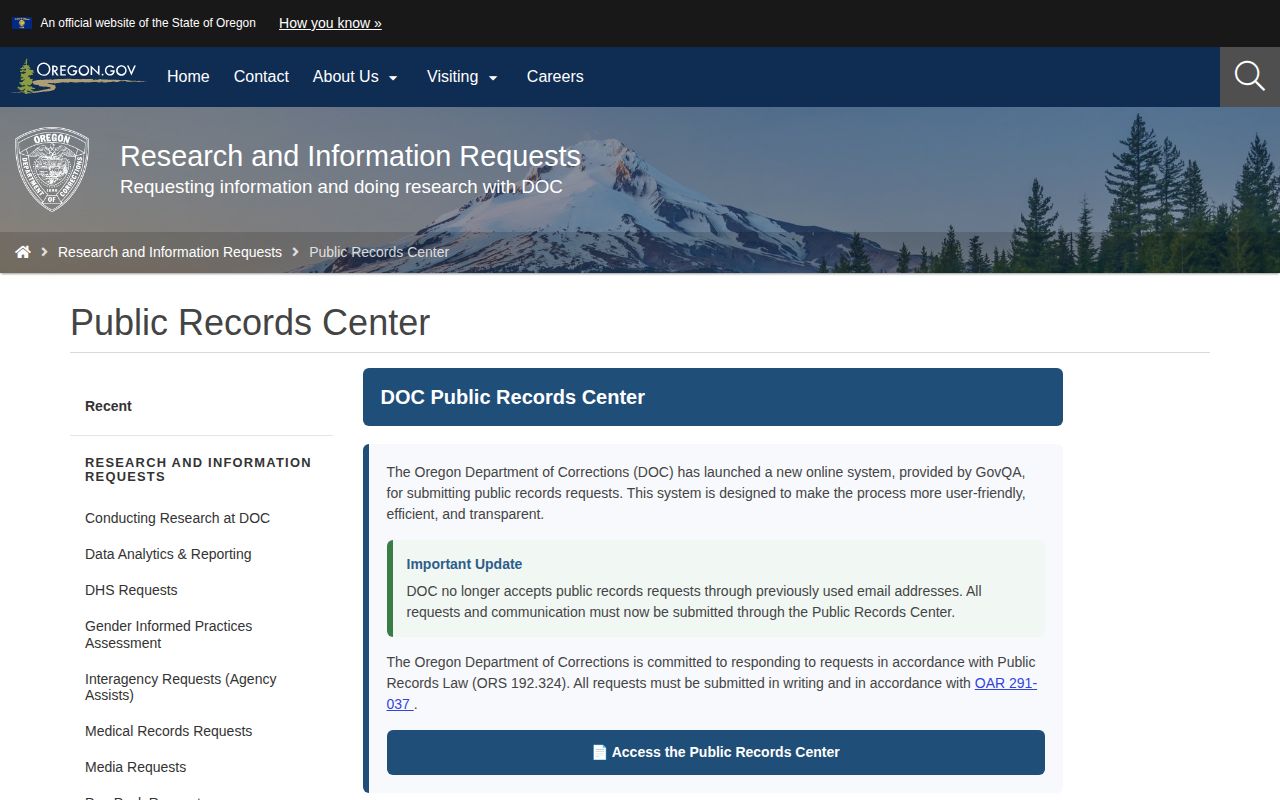
A Pen Pack may contain public sentence records, face sheets, judgments, and applicable parole-discharge material.
A narrow request is easier to process. Identify the person and SID, institution, hearing date, and date range. Ask for the final Board action from the Board, then seek actual release or transfer information and sentence material from DOC. Request the court judgment from the filing court. Reconcile any conflict by date and document type instead of assuming the newest web screen is the complete record.
Oregon Hearing Attendance Rules
The Board's Events Calendar and the named-person hearing calendar serve different tasks. A public meeting entry does not show that one person's release review is scheduled. Use the hearing calendar for the case and the public-events page for general Board events.
Current attendance information must come from the hearing notice. Since May 7, 2025, the Board's published process places hearings in person within specified DOC institutions. Remote participation is limited to qualifying roles and requests under the stated rule. Members of the public face advance DOC screening and on-site procedures. Do not arrive based on an old notice or assume a web stream exists.
Attendance also does not change record access. The final signed action remains the best statement of what the Board decided. When a hearing is rescheduled, the revised notice and later order should replace a saved calendar entry.
Calendar changes need a simple audit trail. Save the hearing notice, note the day it was viewed, and compare it with any later notice for the same person and hearing type. If a date moves, do not treat the first listing as a completed hearing. Ask the Board for the final action after the operative date. A request should distinguish a notice, hearing audio, Board Action Form, and signed order because each item answers a different question. The notice shows what was planned. Audio may preserve the proceeding when it is public. The BAF records coded action, and the order states the formal result. DOC and VISOR then address the custody event that followed. This sequence is especially useful when a projected parole date was affirmed but a detainer, postponement, or later action affected the person's actual destination.
For a person with several Board events, search and request by date range rather than assuming the newest calendar line tells the whole story. A Prison Term hearing can precede an Exit Interview. A revocation can later lead to a Future Disposition hearing. The resulting forms should be read in order. If a code is unclear, use the Board's current hearing descriptions and BAF key. Do not expand an abbreviation from memory, since Oregon's terms are tied to distinct legal processes and sentence structures.
Note: The live calendar shows scheduling, while the Board record establishes the result and DOC establishes the custody event.
Public Record Search
Sponsored Results