
Oregon Projected Versus Actual Release
A projected release date answers a forward-looking question: based on the sentence information and credits now applied, when does DOC expect prison confinement to end? An actual release date records an event that already took place. The two may match, but they are not interchangeable. A stale projection can remain useful as a lead while failing to show a later recalculation, transfer, court order, or hold.
A sentenced person can have a calculable term. A pretrial detainee usually cannot. Before trial or disposition, release may depend on security, a recognizance order, dismissal, a plea and sentence, or another court action. A county roster might display a scheduled or estimated date, but that local field is not the DOC projection for a state-prison sentence. The court, jail, and DOC each hold different parts of the record.
Scheduled versus actual: Never report a person as released only because the projected date has passed. Confirm the departure, destination, and any supervision or new custody.
The OOS opening notice warns that public data are updated at intervals and are not an official record.
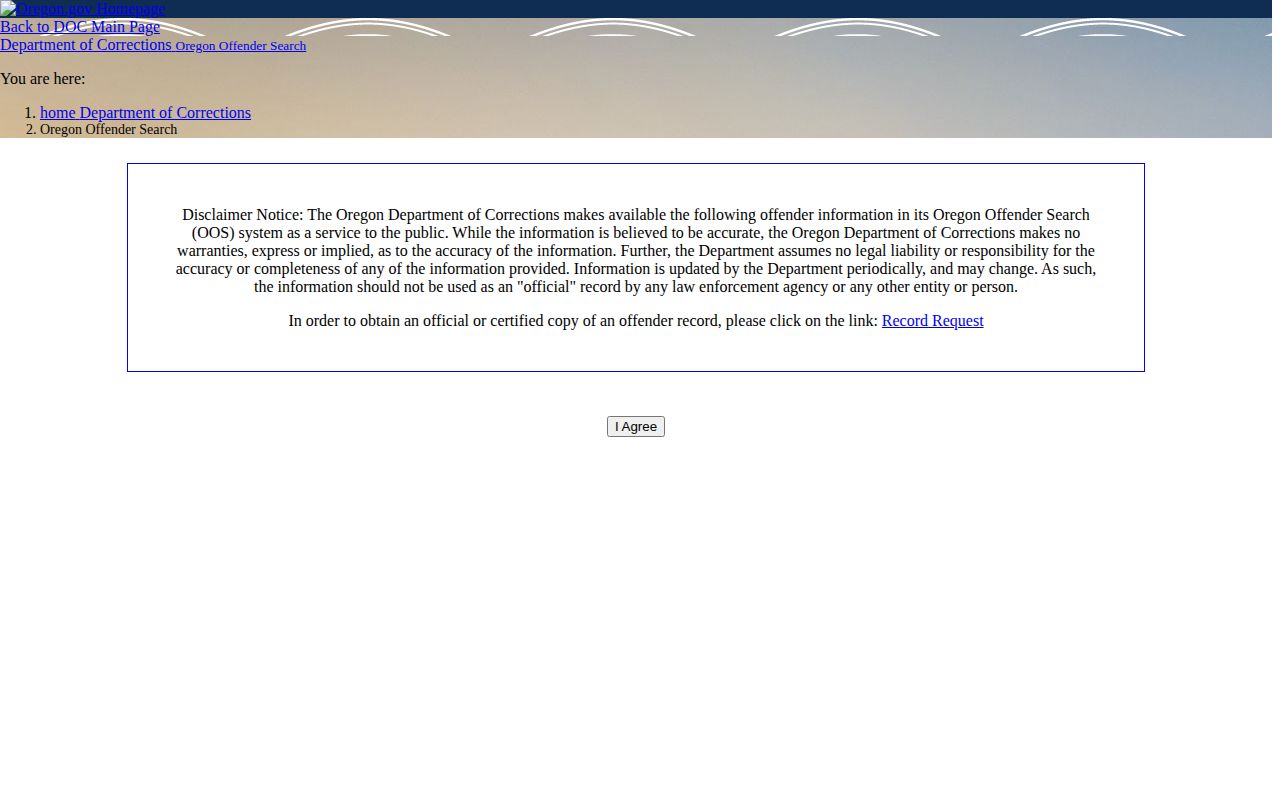
This notice is the first check against treating a projected release date as certified proof.
Find an Oregon Projected Release
Oregon DOC directs the public to Oregon Offender Search, or OOS, for an adult in custody's release date. Use the SID when known because it is the most exact search key. Otherwise search by first and last name. OOS allows an asterisk within or at the end of a name term, but it does not allow one in a SID. Extra fields are joined, so remove an uncertain field if a likely record does not appear.
- Open the official OOS landing page and read its update and accuracy notice.
- Continue to the search form. Enter the SID, or use a carefully checked name.
- Sort the results and select the linked SID for the individual detail record.
- Check aliases in the Names tab if the displayed Court Name differs from the search name.
- Read the projected release date with the status, institution, sentence fields, and data-update notation.
- Record the date viewed, then verify later changes through DOC, VISOR, the court, or the receiving agency.
The OOS criteria screen shows the official SID and name fields used for this lookup.
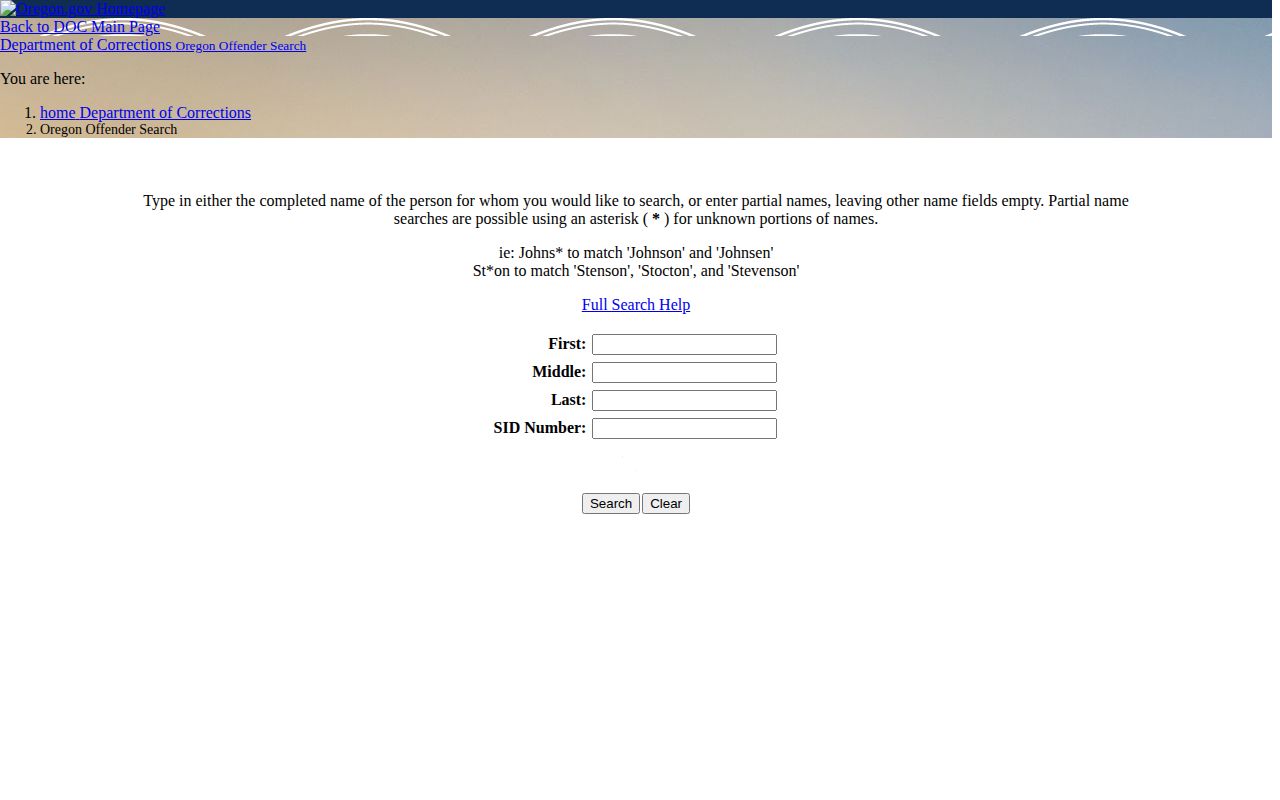
The search identifies the record first; the projected date must then be read from the correct detail page.
Note: OOS shows birth month and year rather than a full birth date, so use the SID and record context.
Oregon Release Dates by Custodian
Start with the agency that controls the person. OOS is the right public snapshot for an Oregon state prisoner. A county or regional jail calculates a short local sentence and follows the local court's orders. FCI Sheridan is federal and belongs in the Bureau of Prisons system. Civil immigration detention is separate again. A person can leave one facility on the projected day but be transferred to another custodian.
| Custody Situation | Date Source | What to Confirm |
|---|---|---|
| Oregon DOC sentence | OOS projected release date | Actual DOC departure, transfer, or supervision start |
| County-jail sentence | Jail records unit and sentencing court | Local credits, release order, and physical departure |
| Pretrial county detention | Court register and current jail record | No fixed date unless the court or another legal event sets one |
| Federal sentence | BOP Inmate Locator and federal judgment | BOP custody status and any supervision |
| Immigration detention | ICE detainee locator | Transfer, release, or field-office confirmation |
A county-jail entry marked DOC, federal, ICE, extradition, or another jail describes a transfer. It does not show unconditional release. Likewise, a residential reentry placement can remain federal custody, and Oregon Short-Term Transitional Leave remains supervised leave under the sentence.
Oregon Earned-Time Release Rules
ORS 421.121 is Oregon's core earned-time statute for qualifying felonies committed on or after November 1, 1989. It permits a reduction tied to appropriate institutional behavior and participation in adult basic-skills programming. The cap is up to 20 percent of the total term of incarceration in a DOC institution. That wording sets a maximum, not an automatic award.
The statute excludes sentences governed by specified mandatory and determinate regimes, including provisions in ORS chapters 137 and 163. Measure 11 is especially important. DOC explains that covered mandatory minimum sentences for certain person offenses do not receive good-behavior reduction, subject to later statutory modifications and limited exceptions. “Everyone gets 20 percent off” is therefore wrong.
| Rule or Record | Effect on the Projection |
|---|---|
| ORS 421.121 earned time | Allows up to a 20 percent reduction for a qualifying DOC term. |
| Statutory exclusions | Remove listed sentence regimes from the ordinary earned-time rule. |
| Measure 11 minimum | Bars good-behavior reduction for covered mandatory terms, subject to later law and exceptions. |
| Presentence custody credit | Credits qualifying time under ORS 137.370 as applied to the sentence. |
| Judgment structure | Concurrent or consecutive terms change the computed end point. |
Read the offense date, conviction statute, judgment, and any exception together. A broad label cannot resolve a person-specific computation. The public OOS field is the snapshot, the judgment is the legal source, and DOC's computation is the administrative record that applies eligible credits.
Why Oregon Release Dates Change
A valid projected release date can move without the earlier screen being fraudulent or careless. DOC may receive an amended judgment after a legal ruling. Credits may be earned, withheld, or lost under the governing rules. A Board decision can affect a Board case. A detainer can change the release destination, even if it does not lengthen the Oregon sentence itself.
| Factor | Possible Change | Best Record |
|---|---|---|
| Earned-time update | Qualifying credits alter the computed prison end date. | DOC sentence computation |
| Institutional misconduct | Loss or denial of credit can move the date later. | DOC computation and public disciplinary material |
| Amended judgment | A legal change can require full recalculation. | Sentencing-court judgment |
| Consecutive or concurrent terms | The sentence structure changes total time. | Judgment and DOC computation |
| Board action | A date can be set, affirmed, deferred, postponed, or changed after revocation. | Signed Board action or order |
| Detainer or hold | The person may go to another jurisdiction rather than the community. | DOC release record and receiving-agency confirmation |
DOC's sentence-recalculation materials direct a reader to the sentencing court for an amended judgment. This division is useful: the court shows the legal change, DOC shows the new calculation, and the later release record shows what actually occurred.
Note: A projected date should be saved with the date viewed because later lawful changes may replace that calculation.
Oregon Transitional Leave Dates
Short-Term Transitional Leave, or STTL, can move a qualifying person from physical custody before the underlying sentence ends. DOC describes potential periods of up to 30, 60, 90, or 120 days under ORS 421.168, agency rules, and applicable legislation. Eligibility includes a qualifying crime, an approved release placement, no detainers, minimum custody at release, clear conduct, and no level 1 or 2 misconduct report within 15 months of the projected date.
STTL is not final discharge. The person remains on supervised leave. Loss of the approved placement, new criminal conduct, prohibited victim contact, noncompliance, or failure to report can lead to revocation. A date tied to transitional leave must therefore identify the event: departure from the institution, start of supervised leave, ordinary projected release, or end of supervision. Using just “release date” hides these different stages.
- Projected release
- DOC's current computed date for a future custody change.
- Transitional leave
- A supervised placement outside physical prison custody before the sentence fully ends.
- Actual release
- The recorded event showing that a person departed a named custodian.
- Discharge
- The end of the applicable custody or supervision obligation, shown by an official record.
Oregon Projection Alert and Proof
Oregon uses three information levels for three different questions. OOS supplies the current projected release date. VISOR, the Victim Information System in ORegon, can send notices when a release date changes, a person moves, or a release is reported. DOC describes notification processing at roughly two-hour intervals, so the proper phrase is near-real-time, not instant. An official DOC record supplies the proof held by the custodian.
The OOS help material explains that its public scope concerns current DOC custody or local Community Corrections.
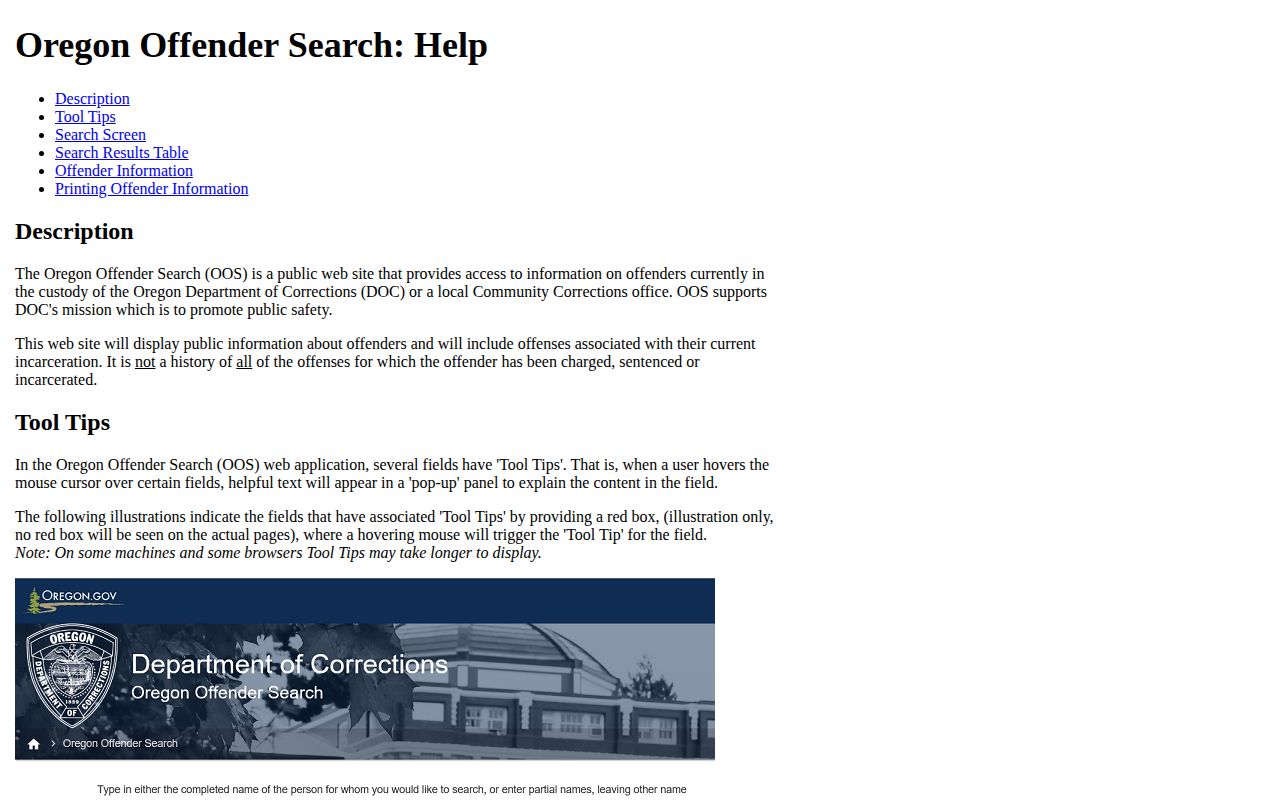
This means a person can leave prison, remain visible during current supervision, and later fall outside the public OOS scope after full discharge.
The current Oregon VISOR search is the event and notification channel for one named person.
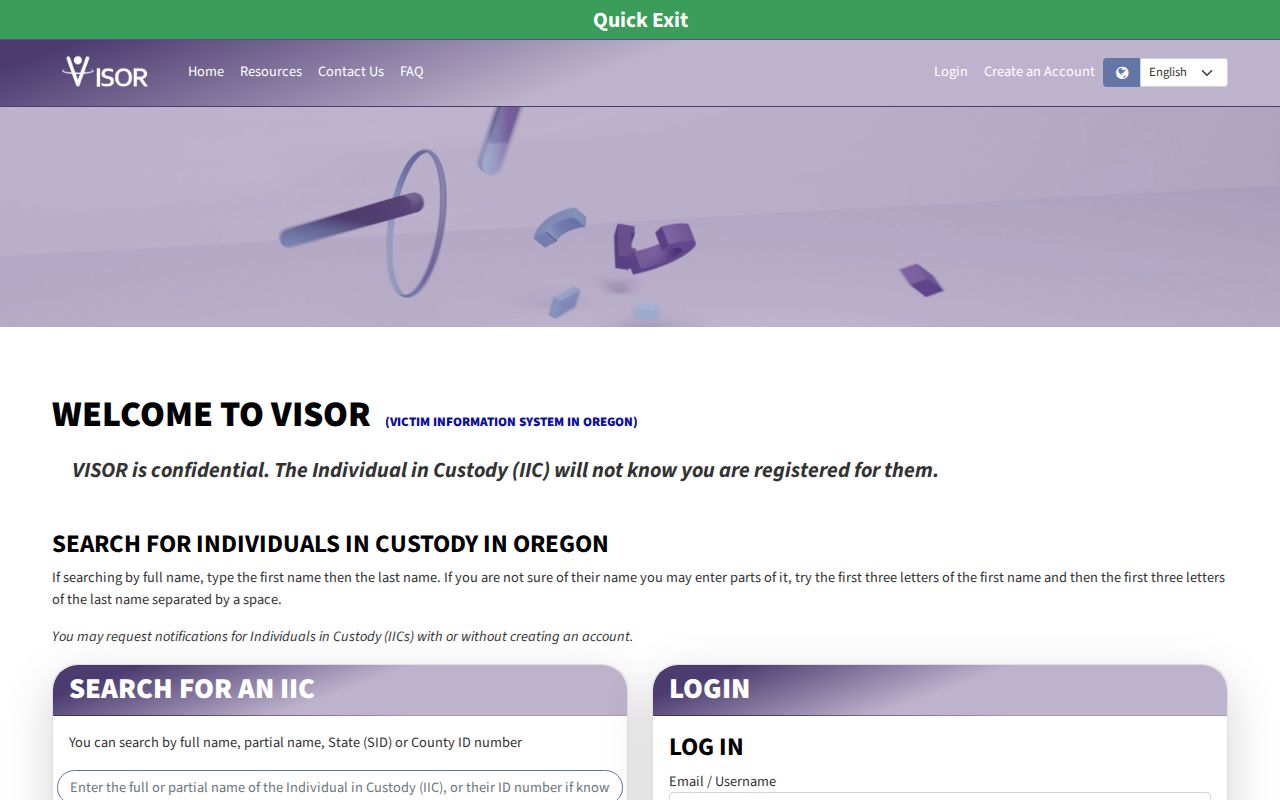
VISOR may show custody status and earliest release information, but its alert still speaks only to the reporting agency's event.
A release alert does not rule out a same-day transfer or another hold. An Offline Jails notice means a connected jail is not transmitting normally; it does not mean all listed people were released. Older VINE instructions that mention a telephone PIN should not be mixed into current VISOR registration. For the current alert process, use the Oregon VINE Inmate Check.
Verify an Oregon Actual Release
After the projected day, return to the responsible systems. Check OOS for its latest status and location. Review VISOR for a reported movement or release event. If Community Corrections now appears, physical prison custody likely ended while active supervision continued. Contact the responsible county office when the present supervision status must be confirmed.
For durable proof, request an actual release date and release authority from DOC. Add the final face sheet, sentence computation, and any public supervision or discharge order. DOC's GovQA Public Records Center is the required request channel. A Pen Pack may include public-information prints, face sheets, court or sentence orders, judgments, and discharge-related material when present. Ask expressly for a certified record if certification is required.
The DOC records and Pen Pack page shows the official fallback for a past release date.
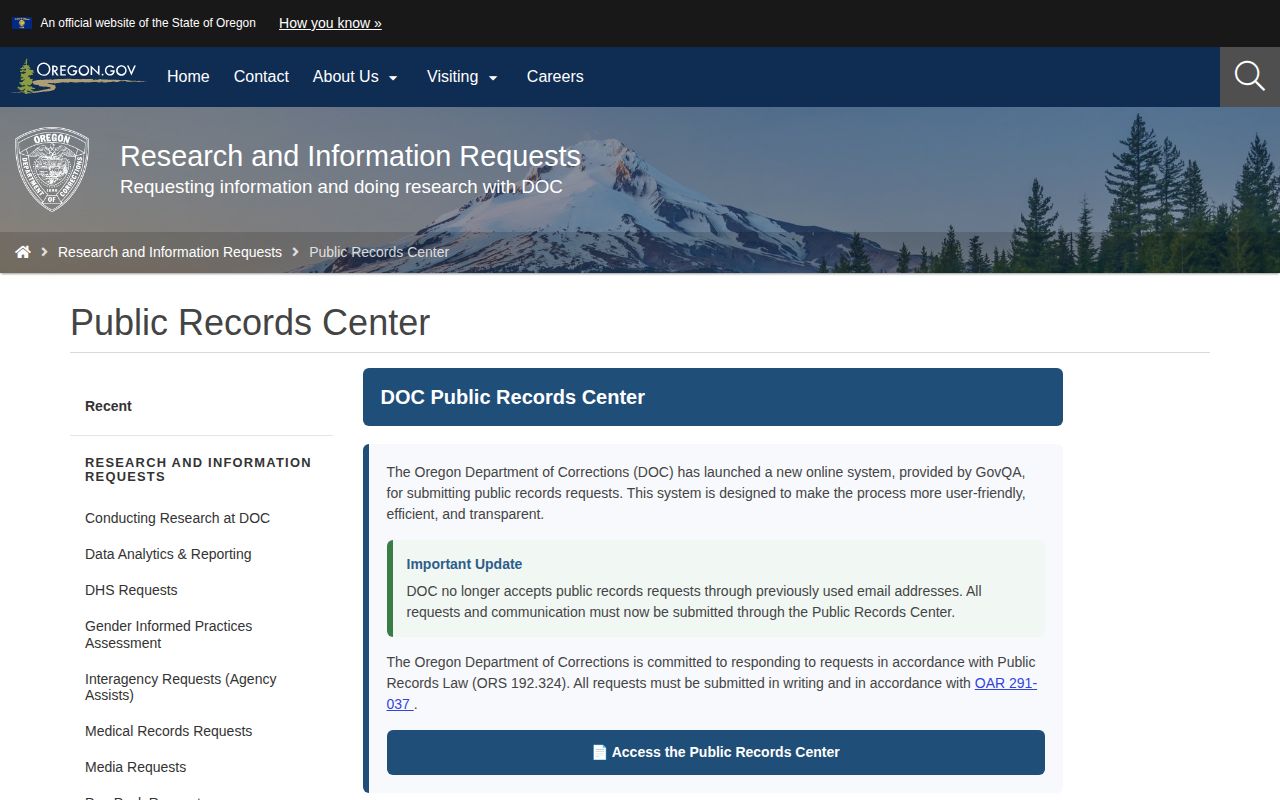
This record route remains available when a person no longer appears in the current-scope offender search.
The final check follows the custody chain. A DOC departure to county supervision is not discharge. A transfer to federal or immigration custody is not community release. A Board or court order may explain the legal authority, while the custodian's release record establishes the physical event. The detailed DOC Offender Search coverage explains how to read current supervision and historical records without inventing a permanent discharged status.
A focused records request should name the person, SID, institution, and date range. Ask for the projection as of a stated date, the sentence computation, the actual departure date, and the release authority or destination. Add any public supervision-expiration or discharge record when the end of correctional authority is the question. These fields prevent one date from being mistaken for the whole custody history.
Use the sentencing court for the judgment and any amendment. A court register can show a modification, revocation, dismissal, or release order, but it may not record the exact moment a jail or prison processed the departure. DOC documents its custody event. The Board documents its own actions in eligible cases. Comparing those sources is especially important when a recalculation occurred close to the projected date.