
Oregon Supervision Terms Compared
Leaving a prison gate does not always end correctional authority. Oregon uses several labels for a person who is no longer in a prison bed but still has an active corrections status. Parole is most often tied to older indeterminate or Board-controlled sentences. Post-prison supervision, often shortened to PPS, follows many modern prison sentences. Probation is imposed by a court and may occur without a prison term. Local control is another status reported in Oregon's community data. Transitional leave changes physical placement before the sentence ends.
The agency and source document depend on the label. The State Board of Parole and Post-Prison Supervision issues or maintains many parole and PPS actions. County community-corrections partners carry much of the day-to-day field supervision. The sentencing court remains the key source for probation judgments and terminating orders.
| Status | Basic meaning | Best record |
|---|---|---|
| Parole | Community release under Board authority, often in an older sentence structure | Board action or order |
| Post-prison supervision | Community supervision after a prison term | Order of Supervision and DOC record |
| Probation | Court-ordered community supervision | Judgment, register, and termination order |
| Local control | A county-administered correctional status | County community-corrections record |
| Transitional leave | Supervised placement before the sentence fully ends | DOC status and leave record |
The March 2026 Community Population Profile shows why the distinctions matter. Its 19,471 community cases include 9,607 in the post-prison group, 9,605 probation cases, and 259 local-control cases. Those are caseload categories, not a daily release count.
Check Oregon Supervision Status
No one public directory proves every form of Oregon supervision. The practical path joins state search data, the county partner, and the formal order. Search terms must also be used with care. A person can be out of prison but remain visible because OOS covers current local Community Corrections cases.
- Search the Oregon Offender Search by SID when known, or by first and last name. Avoid extra fields that may suppress a valid match.
- Read status, location, sentence information, and the update notation together. A community-corrections location points away from prison custody, but does not prove final discharge.
- Search VISOR for current custody or supervision information and compare the responsible agency and identifiers.
- Use Oregon DOC's county partner information to contact the community-corrections office serving the named county. Office structures differ statewide.
- For a formal start date, expiration date, condition, or discharge, request the Order of Supervision, Board action, DOC record, or court order that controls that fact.
The official OOS name and SID form shows the statewide entry point.
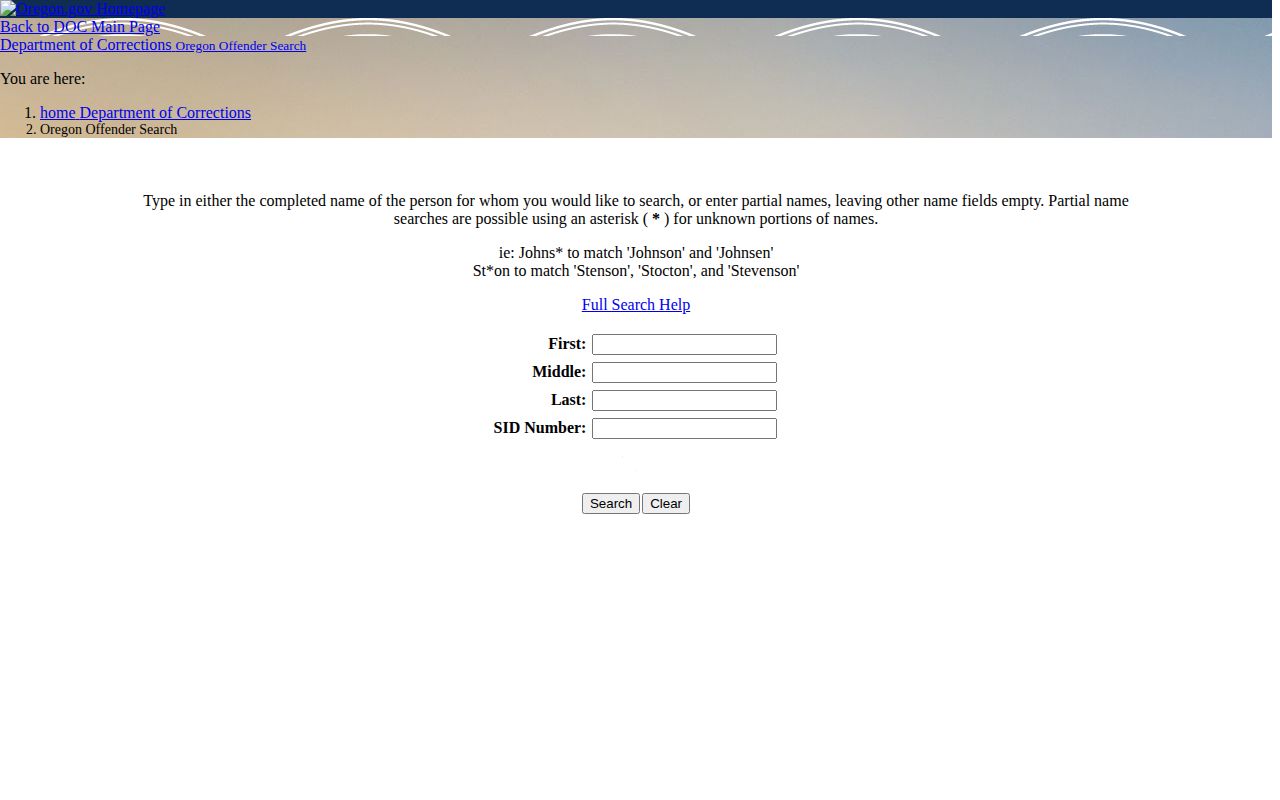
A SID search is usually more precise than a name-only search, especially when names repeat.
Note: A no-match result can reflect full discharge, an incorrect search term, a scope limit, or a data change.
OOS Supervision Scope in Oregon
OOS is not a lifetime history of all released people. DOC says it covers people currently in DOC custody or a local Community Corrections office, with offenses linked to the current incarceration. That scope explains a result that seems odd at first: someone who left prison may remain searchable while supervised, while someone whose custody and supervision both ended may disappear.
The official OOS help page states the current-custody and current-supervision boundary.
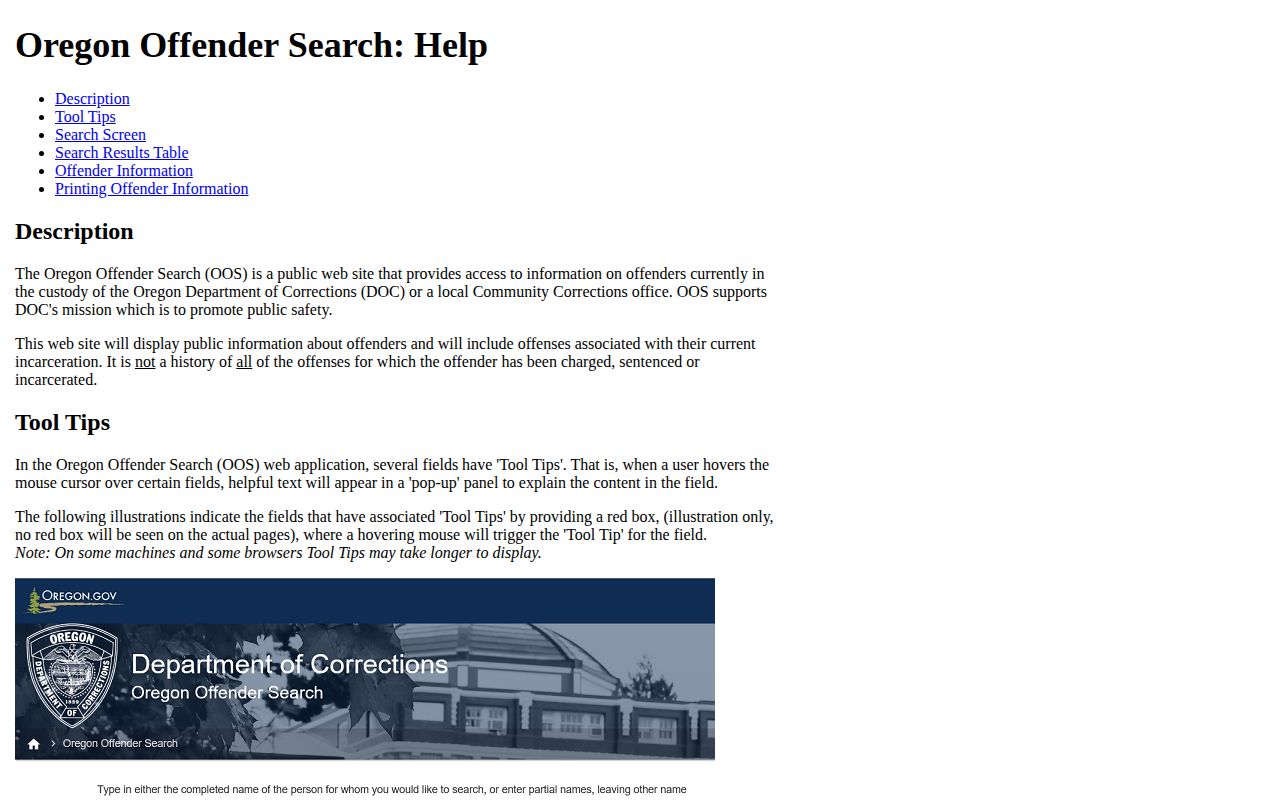
This boundary prevents an online absence from being mislabeled as a discharge certificate.
OOS also distinguishes many active status labels. The March 2026 profile reports 8,895 POSTPRISON, 9,464 PROBATION, 323 PAROLE, 361 LEAVE, and smaller groups such as POSTPAROLE and SECONDLOOK. Do not flatten those labels into the word parole. Quote the status shown, note its date, and confirm it with the responsible agency.
Oregon Supervision Agencies
The State Board of Parole and Post-Prison Supervision, branded as the Oregon Board of Parole, handles Board hearings, actions, and orders within its legal authority. Oregon counties administer much felony probation, parole, and post-prison supervision through community justice, community corrections, sheriff, or regional offices. There is no single statewide office address that replaces those local partners.
State Board of Parole and Post-Prison Supervision
Use the Board for applicable parole and post-prison orders, Board Action Forms, final decisions, and records tied to Board authority.
The Board's sample Order of Supervision is a useful model because it separates actual release from parole or PPS expiration concepts. Conditions should be verified from the signed order, not guessed from a generic list. The correct county office can explain which unit holds the current file, while the issuing court or Board supplies the authoritative order.
The Oregon DOC home page is the agency handoff for statewide corrections services.
Use the agency path to locate OOS, records, data, and county community-corrections resources.
Oregon Violations and Warrants
A condition is a rule imposed by the judgment, Board action, or Order of Supervision. A claimed violation may lead to a sanction, hearing, revocation process, or warrant, depending on the authority and facts. It does not by itself establish a new conviction. Likewise, an absconder label generally means the supervising agency says contact or compliance has been lost. It is not a release type.
Oregon's warrant and absconder information is fragmented. DOC maintains an Oregon Corrections Most Wanted route, some counties publish lists, and other offices require direct confirmation. Cached pages and old images can persist after a status changes. Confirm an active warrant with the issuing court or agency and record when the check was made.
- Absconder
- A person alleged to have stopped reporting or otherwise left supervision contact.
- Revocation
- A formal action that can withdraw a community status after the required process.
- Detainer
- An instruction that another authority may take custody when the current custodian releases the person.
- Discharge
- The documented end of the applicable custody or supervision obligation.
A jail booking following a violation is a new custody event. It should be checked with the jail and court, not inferred from an older community-supervision record.
Oregon Discharge Records
Actual release and supervision expiration are separate fields in Oregon records. The sample Board Order of Supervision makes that plain. A physical prison departure can start PPS or parole, while discharge may occur much later. For probation, the sentencing court's register and terminating order are the primary sources. For parole discharge, a Board record or a DOC Pen Pack may carry the needed proof.
When no current OOS result appears, request the document instead of supplying a status that the portal did not show. A useful request identifies the person, SID if known, date range, institution or county, and the exact item sought. Ask for the release date, release authority, supervision start and expiration fields, final face sheet, and any public discharge order that exists.
The DOC Public Records Center explains the official-record and Pen Pack route.
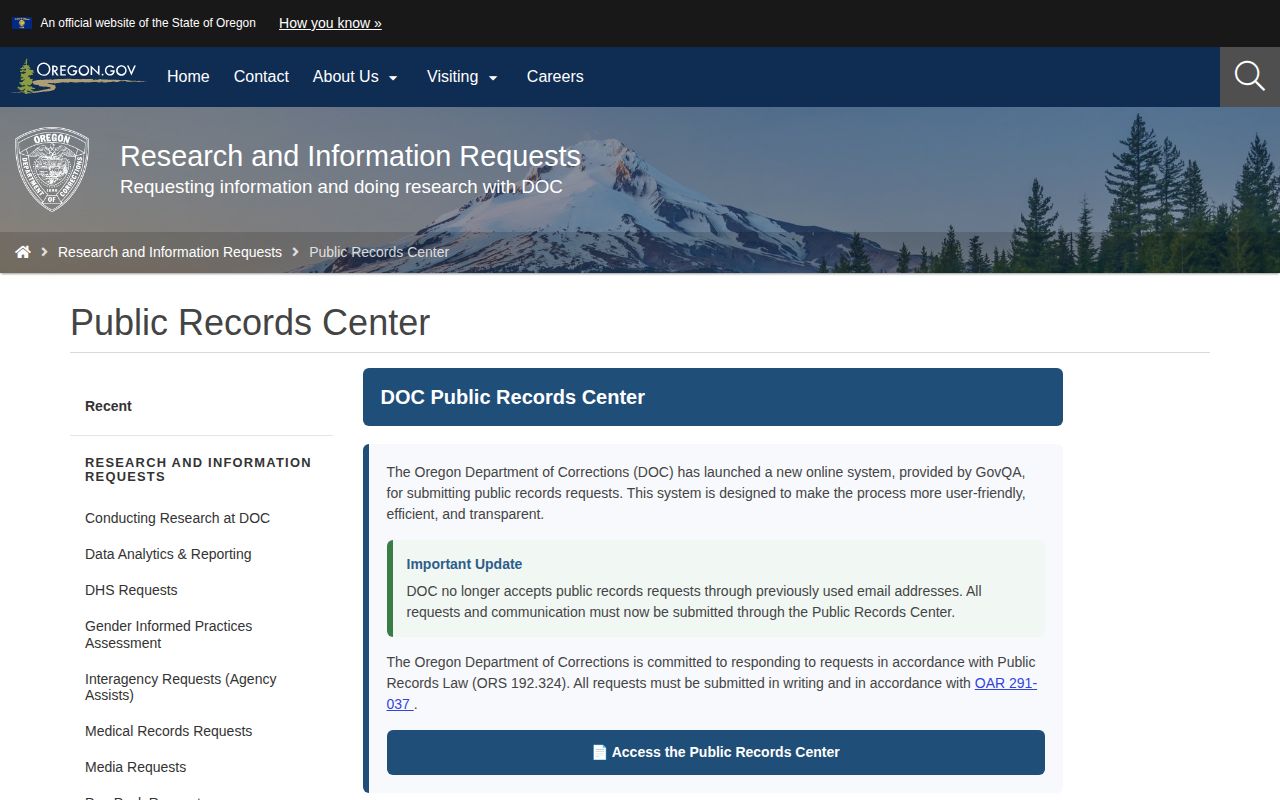
A Pen Pack may include sentence records and, when present, parole-discharge or violation material.
DOC now directs requests through its Public Records Center rather than former records email addresses. Oregon Public Records Law allows agencies to clarify scope, review responsive material, redact exempt content, and estimate fees. Ask for certification when a certified record is required.
Keep the record types aligned with the authority that created them. A Board order can establish a parole or PPS action, but it does not replace the court's probation order. A court register can show that probation was terminated, yet it may not document the physical moment a prison transfer occurred. DOC's custody and sentence files address that part. If two dates appear to conflict, compare their labels, effective dates, and issuing agencies before asking for clarification. One may mark prison release while another marks the later end of community supervision. A precise request for each event avoids a broad response that is hard to interpret.
VISOR and Oregon Supervision
VISOR, the Victim Information System in ORegon, offers another current-status check. It can identify a custody or supervision agency, location, status date, and release-related fields. A VISOR event reports what a participating agency sent. It does not rule out a transfer, detainer, or another agency's custody.
The current Oregon VISOR search provides the individual lookup.
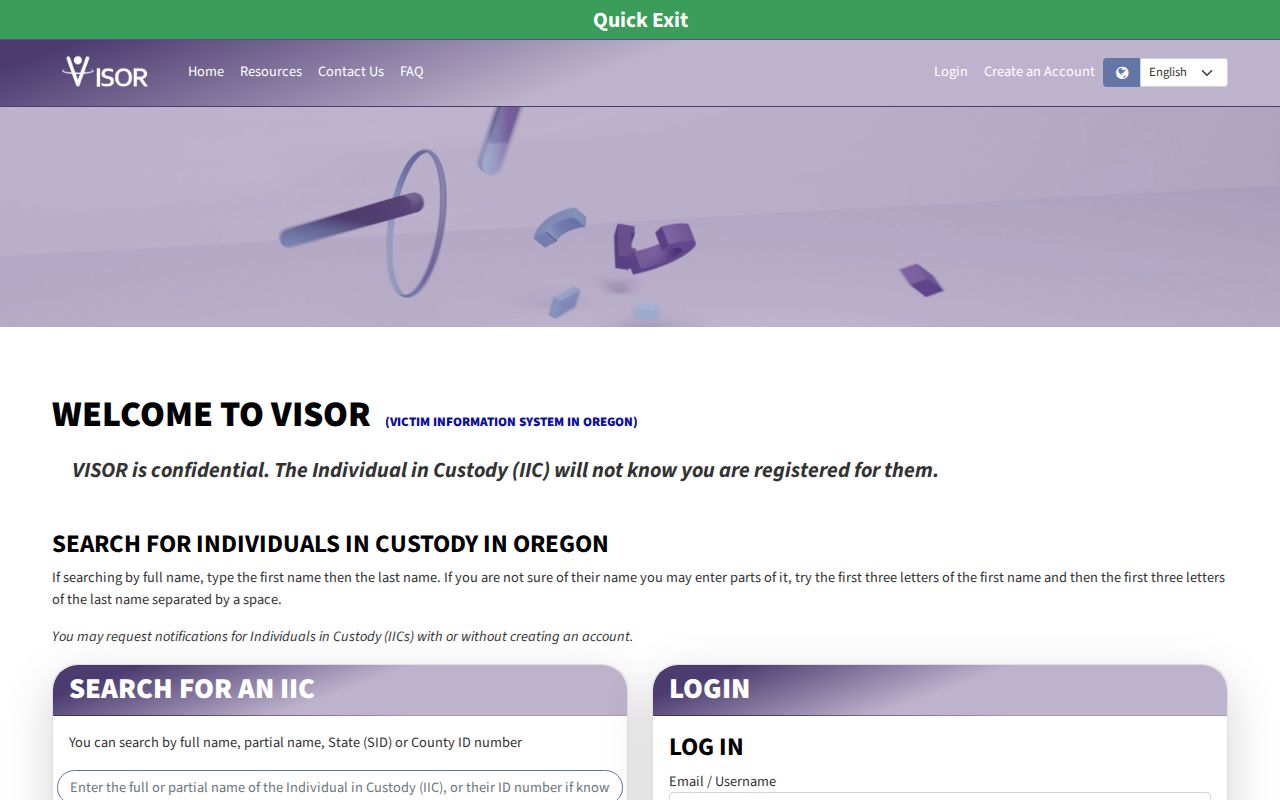
Compare the identifier and listed agency before treating a result as the right person.
VISOR may display an Offline Jails notice. That is a transmission warning, not proof that everyone from the named jail was released. For an urgent status check, contact the jail or supervising agency. VISOR support is available at 855-691-6246 for notification, site, and record questions.
Note: Oregon describes VISOR processing as approximately every two hours, so alerts are near-real-time rather than instant.
When Oregon Supervision Ends
Supervision ends under the judgment, statute, and the authority of the court, Board, or DOC. The last day in prison is not automatically the last day of the sentence. A projected expiration is also not the same as a signed discharge. Changes, violations, court orders, and Board actions can affect the record before the end.
Build the proof chain from the governing source. For probation, obtain the judgment, register entries, and terminating order from the filing court. For parole or PPS governed by the Board, request the Board action and final order. For DOC sentence and discharge material, use the Public Records Center. If the person remains active in OOS, compare the portal status with the formal document rather than treating either in isolation.
Timing deserves a close read. The actual-release field marks the custody event addressed by the order, while a parole or PPS expiration field addresses the later supervision horizon. A projected expiration can still differ from a final discharge record. When a current office says supervision ended, ask which document entered that result and which authority signed it. For probation, the filing court may have a terminating order even after a county supervision office closes its working file. For a Board case, the Board action is stronger evidence than an old calendar or saved portal screen. Record the agency, document title, effective date, and access date. That small record trail makes it possible to explain why an older OOS result, a newer VISOR event, and a final signed order do not display the same date.
County administration also affects the search. Oregon counties may place community corrections in a sheriff, community justice department, county corrections unit, or regional arrangement. A move between counties does not by itself end the statewide sentence. Confirm which county currently has field responsibility and whether the original sentencing court still controls probation. If Interstate Compact supervision is involved, the receiving state may handle field contacts while Oregon records still describe the sending case. The research does not establish one public Interstate Compact lookup, so use the order and responsible offices rather than inferring a transfer from an address or location label.
The statewide release record and custody routes are covered on the Oregon released inmates home page. That broader check helps distinguish a county-jail departure, a state-prison release, and a federal or immigration transfer before supervision is assessed.
Public Record Search
Sponsored Results